 Virginia Tech Dendrology
balsam fir Pinaceae Abies
balsamea (L.) Mill.


 symbol: ABBA
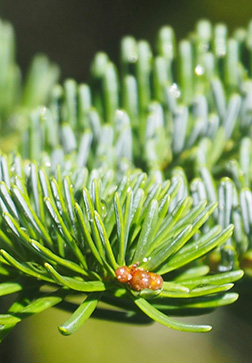
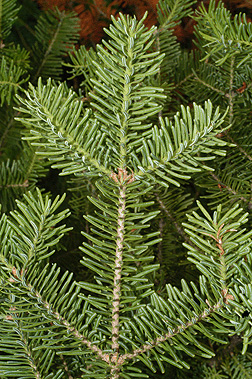
Leaf: Flattened needles, 3/4 inch long, blunt or notched at end, may be shorter and sharper pointed on upper branches, shiny dark green above and silvery-blue below.
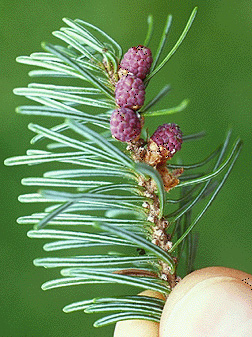
Flower: Species is monoecious; males occur on undersides of leaf axils, purple to yellow-brown; females occur in upper crown, are purple and inconspicuous.
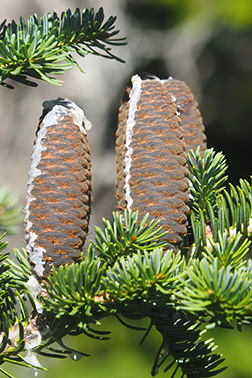
Fruit: Resinous cones are upright, 2 to 3 1/2 inches long, oblong to cylindrical, green with purple tinge, with bracts shorter than the scales; scales are deciduous with seed dispersal in late summer.
Twig: Yellow-green, later turning gray; buds are reddish brown and resin covered; leaf scars are flat and rounded.
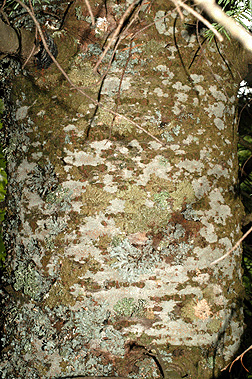
Bark: Shiny silvery gray-brown, smooth except for numerous, raised resin blisters; largest stems may become a bit scaly.
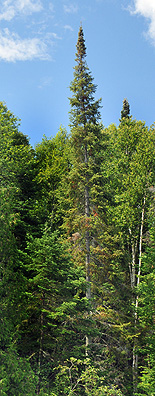
Form: Balsam fir is a small to medium sized tree reaching 80 feet tall with a very narrow, spire-like crown.
Looks like: Fraser fir
- white fir
- eastern hemlock
- English yew
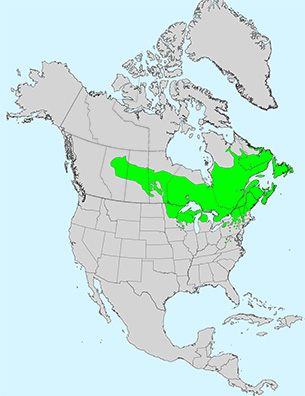
Additional Range Information: Abies balsamea is native to North America. Range may be expanded by planting. Download the full-size PDF map.
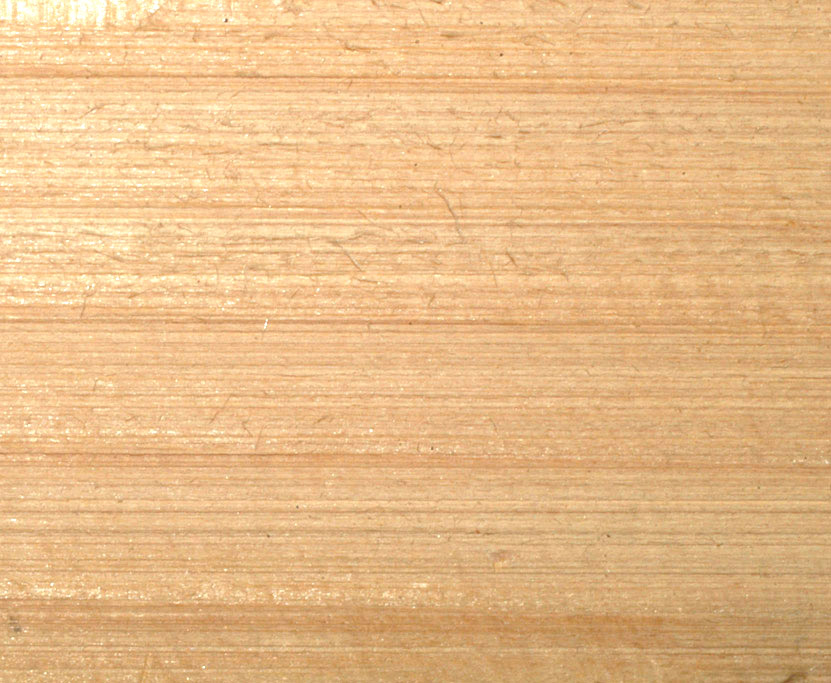
More Information: Wood - Landowner Factsheet
External Links: USDAFS Silvics of North America - USDAFS FEIS Silvics - USDA Plants Database - USDAFS Forest Products Lab
All material 2021 Virginia Tech Dept. of Forest Resources and Environmental Conservation; Photos and text by: John Seiler, Edward Jensen, Alex Niemiera, and John Peterson; Silvics reprinted from Ag Handbook 654; range map source information