 Virginia Tech Dendrology
southwestern white pine Pinaceae Pinus
strobiformis Engelm.

 symbol: PIST3
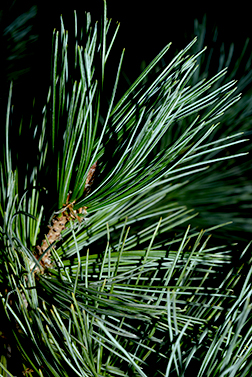
Leaf: Evergreen needles, 2 to 3 inches long, in fascicles of 5, finely serated near tips, thin bluish-green with white stomatal lines only on inner surfaces, fascicle sheath deciduous.
Flower: Species is monoecious; males cylindrical, pale yellow, in clusters near branch tips; females light green to reddish, near ends of branches.
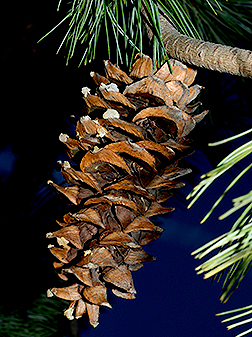
Fruit: Woody cone, 5 to 9 inches long, yellow-brown, thick scales bend backwards and have a narrow tip, matures in late summer.
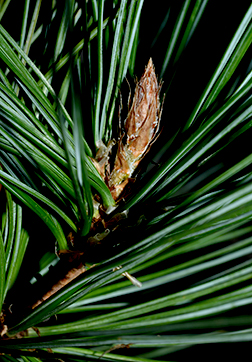
Twig: Slender to moderate, green turning to a gray-brown, buds ovate, conical.
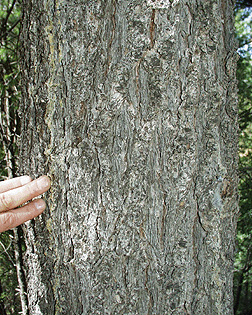
Bark: Gray-brown and initially smooth, becoming furrowed with scaly, rounded ridges.
Form: Medium sized straight tree with a conical crown when young, later broader with up-turned branches and a flat top.
Looks like: limber pine
- western white pine
- whitebark pine
- sugar pine
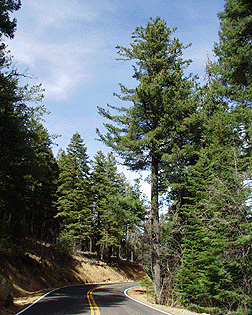
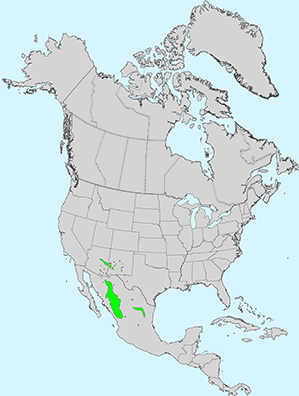
Additional Range Information: Pinus strobiformis is native to North America. Range may be expanded by planting. Download the full-size PDF map.
External Links: USDAFS FEIS Silvics - USDA Plants Database
All material 2025 Virginia Tech Dept. of Forest Resources and Environmental Conservation; Photos and text by: John Seiler, Edward Jensen, Alex Niemiera, and John Peterson; Silvics reprinted from Ag Handbook 654; range map source information