 Virginia Tech Dendrology
canyon live oak Fagaceae Quercus
chrysolepis Liebm.

 symbol: QUCH2
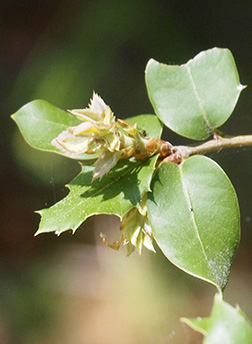
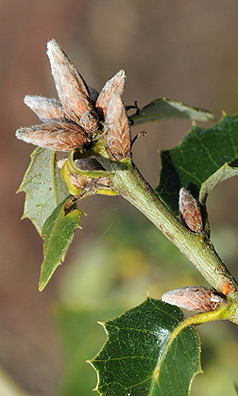
Leaf: Alternate, simple, persistent; variable shape, oblong to elliptical, thick and leathery, small (1 to 3 1/2 inches long), margins may be entire or spinose (holly-like) on the same branch, initially fuzzy but becoming smooth and green above and smooth and bluish-white below.
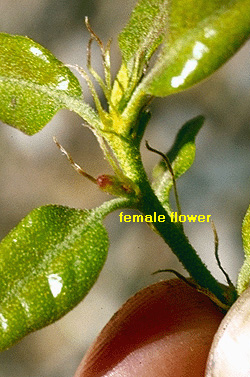
Flower: Species is monoecious; inconspicuous; male flowers borne in aments (catkins); female flowers borne solitary or in short spikes, appearing with the leaves.
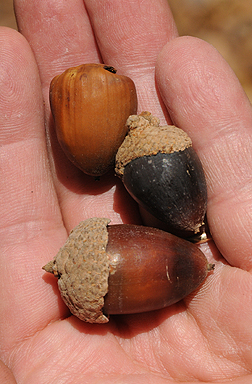
Fruit: An elongated acorn with a shallow, scaly cap, 1/2 to 1 1/2 inches long, requires 2 seasons to mature.
Twig: Slender, rigid or flexible, fuzzy when young but becoming smooth and reddish to grayish brown with age.
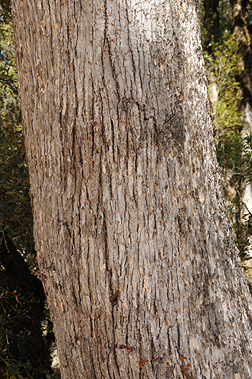
Bark: Thin (about 1 inch) and mostly smooth; may develop small, tight scales with age; gray-brown.
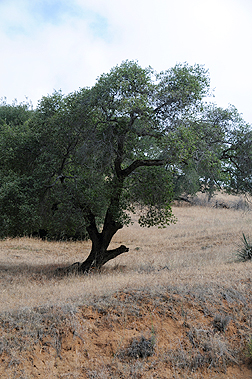
Form: Grows both as a tree (to 80 feet tall and 2 feet in diameter) and as a dense shrub up to 15 feet tall.
Looks like: tanoak
- interior live oak
- huckleberry oak
- Arizona white oak
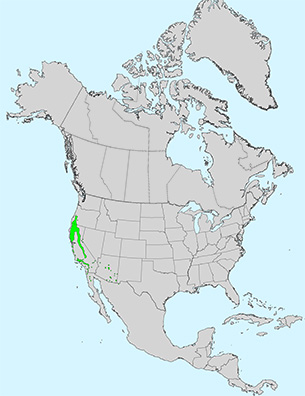
Additional Range Information: Quercus chrysolepis is native to North America. Range may be expanded by planting. Download the full-size PDF map.
External Links: USDAFS Silvics of North America - USDAFS FEIS Silvics - USDA Plants Database
All material 2021 Virginia Tech Dept. of Forest Resources and Environmental Conservation; Photos and text by: John Seiler, Edward Jensen, Alex Niemiera, and John Peterson; Silvics reprinted from Ag Handbook 654; range map source information