 Virginia Tech Dendrology
interior live oak Fagaceae Quercus
wislizeni A. DC.

 symbol: QUWI2
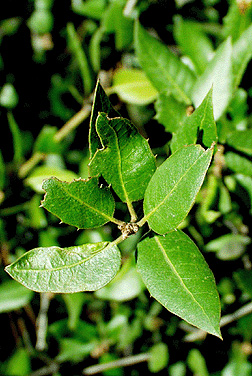
Leaf: Alternate, simple, evergreen, leathery, ovate to elliptical, 1 1/2 to 2 inches long, margin either entire or with sharply pointed teeth; leaf surface flat, shiny green above, yellow-green below.
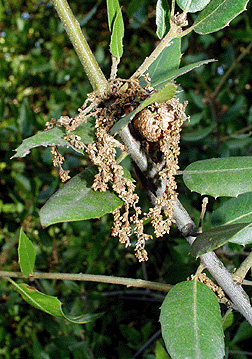
Flower: Species is monoecious; males are slender, yellow-green catkins 2 to 3 inches long; females are very small, in clusters of 2 to 4 in leaf axils; both appear in early spring with the leaves.
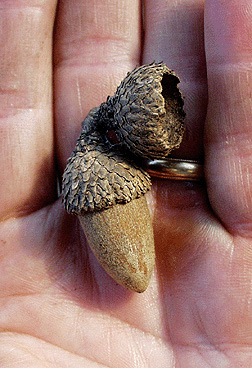
Fruit: Acorn, 1 to 1 1/2 inches long, narrow, cone shaped with a pointed end; cap is scaly and covers approximately 1/3 to 1/2 of the nut; matures in 2 seasons.
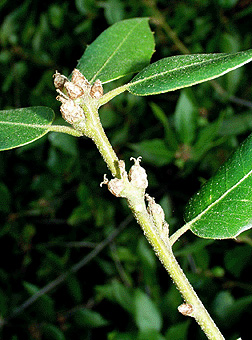
Twig: Moderate, greenish brown, fuzzy when young; buds clustered orange-brown, broadly triangular and pointed.
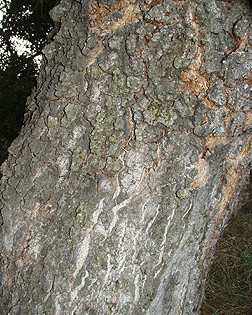
Bark: Young bark is smooth gray, green-brown; older stems become very dark rough and irregularly furrowed with scaly ridges.
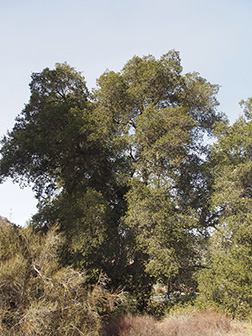
Form: A medium sized tree with a short trunk and very broad round crown with ascending branches.
Looks like: coast live oak
- island live oak
- canyon live oak
- scrub oak
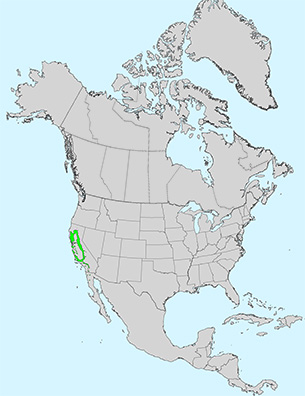
Additional Range Information: Quercus wislizeni is native to North America. Range may be expanded by planting. Download the full-size PDF map.
External Links: USDAFS FEIS Silvics - USDA Plants Database
All material 2025 Virginia Tech Dept. of Forest Resources and Environmental Conservation; Photos and text by: John Seiler, Edward Jensen, Alex Niemiera, and John Peterson; Silvics reprinted from Ag Handbook 654; range map source information