 Virginia Tech Dendrology
English walnut Juglandaceae Juglans
regia L.

 symbol: JURE80
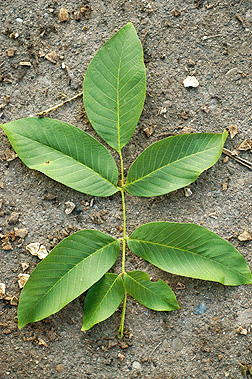
Leaf: Alternate, pinnately compound with 5 to 7 (occasionally 9) leaflets, to 12 to 18 inches long, leaflets are ovate to obovate with entire or sometimes finely serrated margins, to 5 inches long, rachis is stout, terminal leaflets the largest; purple-brown when developing, shiny green when mature, very aromatic when crushed.
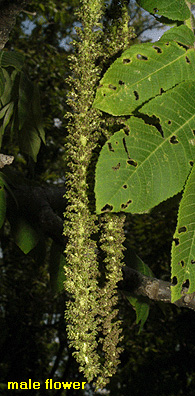
Flower: Species is monoecious; males are single-stemmed catkins to 6 inches; females in clusters of 3-9, with or just after the leaves.
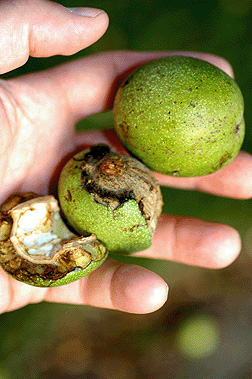
Fruit: Round nut, to 2 inches in diameter; husk is moderate and indehiscent, initially bright green but turning brown, nut is relatively thin and smooth with a few shallow furrows; flesh is creamy white to light brown, sweet, oily (edible); matures in fall.
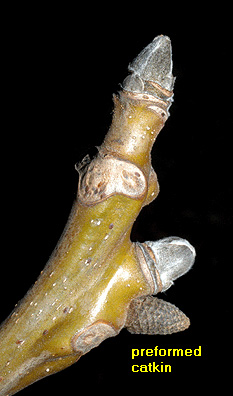
Twig: Stout, light brown, with a buff-colored chambered pith, terminal buds are large, broadly pointed, often paired and pubescent, lateral buds are much smaller, pre-formed male catkins often in axils of leaves, leaf scar 3-lobed.
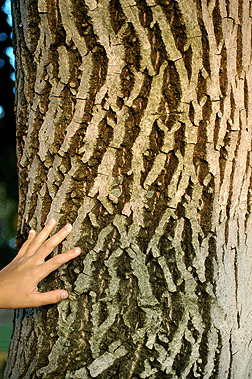
Bark: Light, ashey gray, with flattened ridges, developing a striking diamond shaped pattern.
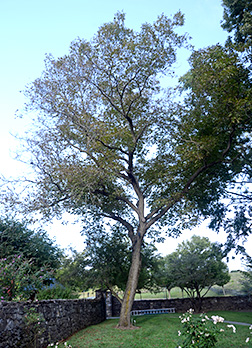
Form: Generally to 60 feet, with an equally wide spread crown; obvious stout twigs.
Looks like: butternut
- black walnut
- California black walnut
- mockernut hickory
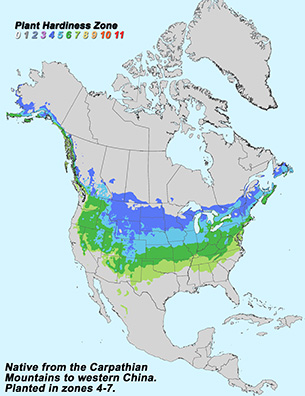
Additional Range Information: Juglans regia is planted in the USDA hardiness zones shown above and is not known to widely escape cultivaton. Download the full-size PDF map.
External Links: USDA Plants Database
All material 2025 Virginia Tech Dept. of Forest Resources and Environmental Conservation; Photos and text by: John Seiler, Edward Jensen, Alex Niemiera, and John Peterson; Silvics reprinted from Ag Handbook 654; range map source information