 Virginia Tech Dendrology
California black walnut Juglandaceae Juglans
californica S. Watson

 symbol: JUCA
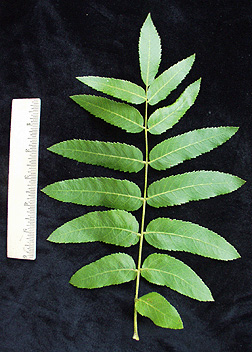
Leaf: Alternate, pinnately compound with 9 to 15 leaflets, 7 to 12 inches long, leaflets are narrowly ovate to lanceolate and finely serrated margins, 1 to 3 inches long, shiny green above and paler below.
Flower: Species is monoecious; male flowers in yellow-green hanging catkins, 2 to 3 inches long from last year twigs; female flowers are very small and occur on short spikes either singly or in clusters of 2 or 3 near the ends of the current year twigs, appearing in spring with the leaves.
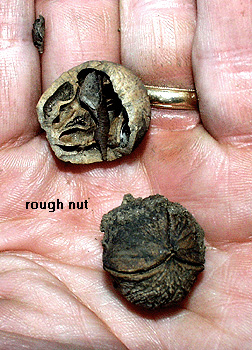
Fruit: Round nut, 1 to 1 1/2 inches in diameter; husk is thin, initially bright green but turning brown; nut is shallowly grooved, maturing in fall.
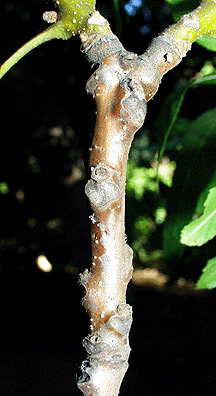
Twig: Stout, initially green but turning reddish brown, buds are scruffy light brown; leaf scar very large, raised and 3-lobed; pith chambered.
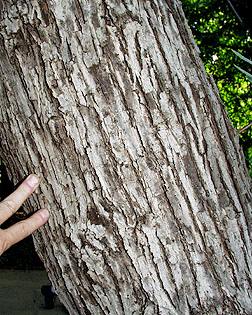
Bark: Gray to brown, shallowly fissured, ridges flat topped and scaly.
Form: A small to medium sized tree ranging from 20 to 40 feet tall, most trees fork into several trunks near the ground and have an over all v-shape.
Looks like: Hind's black walnut
- Arizona walnut
- English walnut
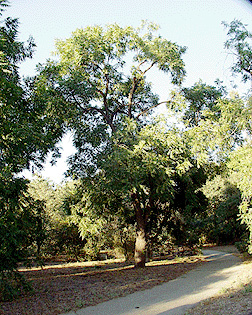
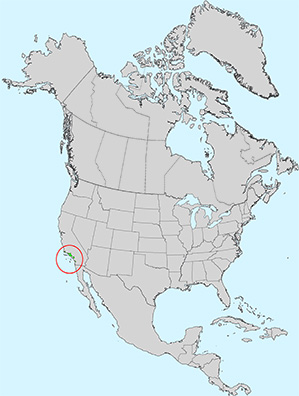
Additional Range Information: Juglans californica is native to North America. Range may be expanded by planting. Download the full-size PDF map.
External Links: USDAFS FEIS Silvics - USDA Plants Database - USDAFS Forest Products Lab
All material 2025 Virginia Tech Dept. of Forest Resources and Environmental Conservation; Photos and text by: John Seiler, Edward Jensen, Alex Niemiera, and John Peterson; Silvics reprinted from Ag Handbook 654; range map source information