 Virginia Tech Dendrology
Arizona cypress Cupressaceae Hesperocyparis
arizonica (Greene) Bartel

 symbol: HEAR22
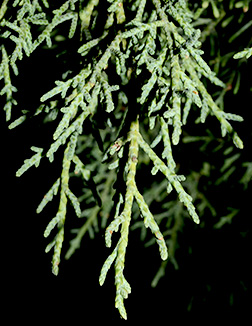
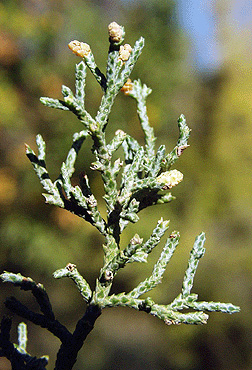
Leaf: Evergreen, scale-like, keeled, tight and crowded on the twig in opposite pairs resulting in a square twig, glandular and often resinous; gray-green to silvery blue, often quite glaucous, bad smelling when bruised.
Flower: Species is monoecious; males are small, pale yellow-green at ends of branch tips; females small light green near branch tips.
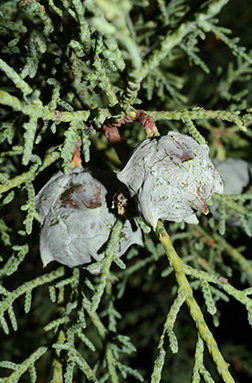
Fruit: Dry, round, woody, serotinous (open with fire) cones, 1 inch in diameter, 6 to 8 pointed scales, initially glaucous and green but turning brown when mature; mature in two growing seasons and remain on branches for several years.
Twig: Slender, square, covered in scale-like leaves, pointed at tips, turning gray with age; typically branch at nearly right angles.
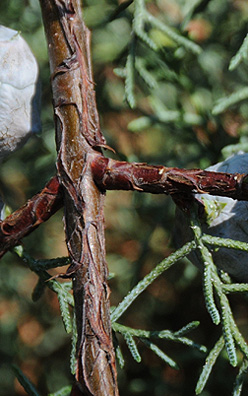
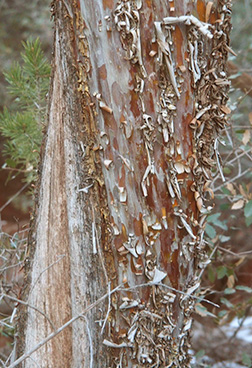
Bark: Very attractive, shreddy and peeling in long strips to reveal gray and reddish brown patches; on older trees the bark may develop a fine, shallow furrowed pattern or reveal a mottled patchy look.
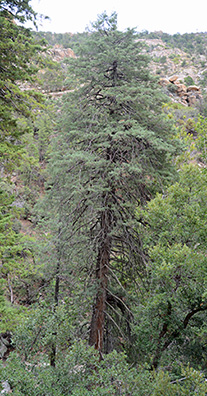
Form: An upright, straight tree to 60 feet, narrow (widens with age), dense, conical crown with branches low to the ground.
Looks like: Tecate cypress
- Monterey cypress
- Rocky Mountain juniper
- Utah juniper
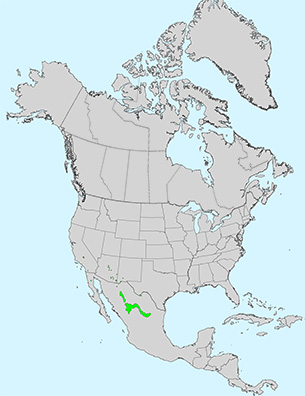
Additional Range Information: Hesperocyparis arizonica is native to North America. Range may be expanded by planting. Download the full-size PDF map.
External Links: USDAFS FEIS Silvics - USDA Plants Database - Horticulture Information
All material 2021 Virginia Tech Dept. of Forest Resources and Environmental Conservation; Photos and text by: John Seiler, Edward Jensen, Alex Niemiera, and John Peterson; Silvics reprinted from Ag Handbook 654; range map source information