 Virginia Tech Dendrology
black maple Aceraceae Acer
nigrum Michx. f.

 symbol: ACNI5
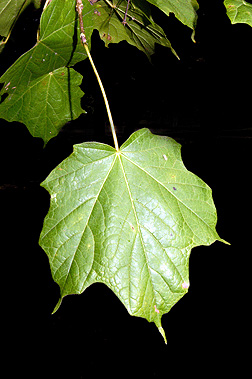
Leaf: Opposite, simple and palmately veined, 3 to 6 inches long, 3 (occasionally 5) lobed with entire margin, often wilted-looking, large stipules may be present, with pubescence on the underside.
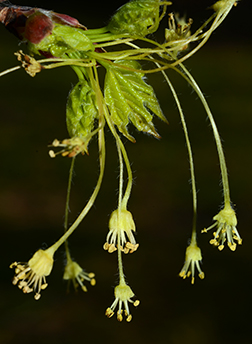
Flower: Yellow to green, small, clustered, hanging from a long (1 to 3 inch) stem, appearing with the leaves.
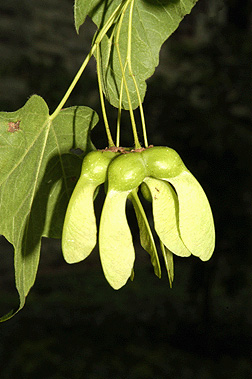
Fruit: Two-winged horseshoe-shaped samaras about 1 inch long, appearing in clusters, matures in autumn.
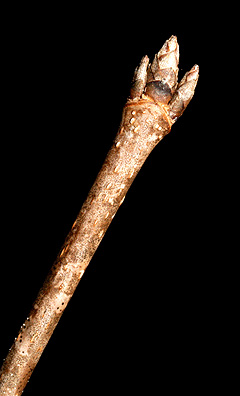
Twig: Brown, slender to moderate and shiny with lighter lenticels, may be gray pubescent, especially near the terminal buds. Terminal buds brown (may be pubescent), plump, and very sharp pointed.
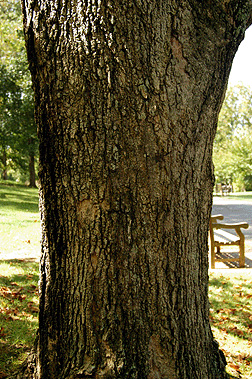
Bark: Variable, but generally dark gray-brown to black; older trees may be furrowed with long, thick, irregular ridges or scaly.
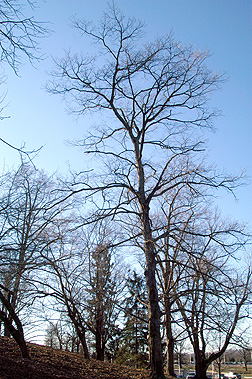
Form: Medium to tall tree (to 100 feet) with very dense elliptical crown.
Looks like: sugar maple
- Florida maple
- Norway maple
- bigleaf maple
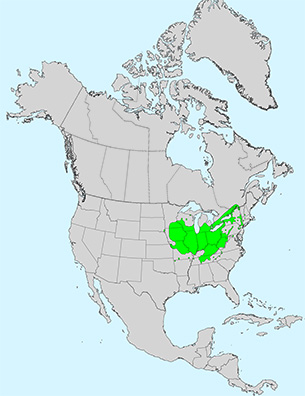
Additional Range Information: Acer nigrum is native to North America. Range may be expanded by planting. Download the full-size PDF map.
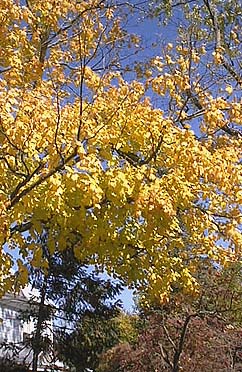
More Information: Fall Color - Wood
External Links: USDAFS Silvics of North America - USDA Plants Database - USDAFS Forest Products Lab
All material © 2021 Virginia Tech Dept. of Forest Resources and Environmental Conservation; Photos and text by: John Seiler, Edward Jensen, Alex Niemiera, and John Peterson; Silvics reprinted from Ag Handbook 654; range map source information