 Virginia Tech Dendrology
bigleaf maple Aceraceae Acer
macrophyllum Pursh

 symbol: ACMA3
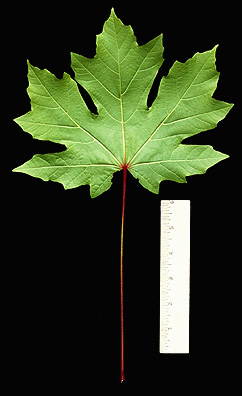
Leaf: Opposite, simple, deciduous, 6 to 12 inches in diameter, but sometimes larger; palmately lobed with 5 deep lobes, terminal lobe has a distinct waist; dark green above and lighter green below. Petiole exudes a milky sap.
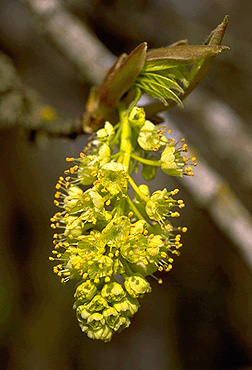
Flower: Species is monoecious; small yellow flowers borne in long racemes; may be perfect or imperfect.
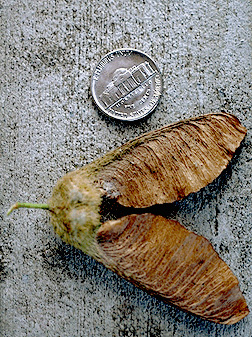
Fruit: Double samaras with wings 1 1/2 to 2 inches long, wings occur at acute angle, seed head hairy, seeds tan when ripe.
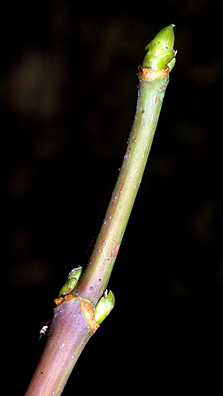
Twig: Stout, smooth, round, and pale green, turning bright green or red, then grayish brown; buds opposite, terminal bud large, stout, with 3 or 4 greenish red scales.
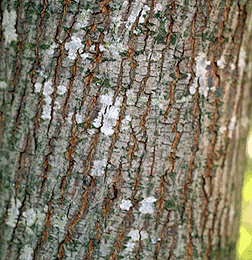
Bark: When young it is smooth and grayish brown, later becoming darker brown with interlacing ridges and furrows.
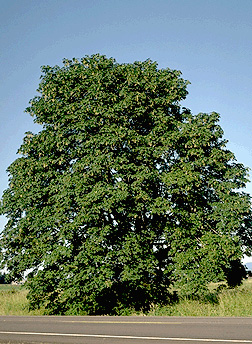
Form: A large tree, commonly 40 to 100 feet tall and 2 to 4 feet in diameter. In the open, it branches low to the ground and forms a rounded crown; in dense stands it grows taller and straighter. Commonly sprouts from the base and forms large basal burls.
Looks like: sugar maple
- vine maple
- Rocky Mountain maple
- California sycamore
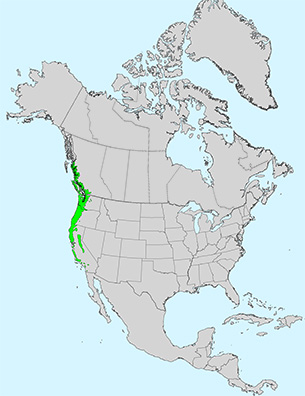
Additional Range Information: Acer macrophyllum is native to North America. Range may be expanded by planting. Download the full-size PDF map.
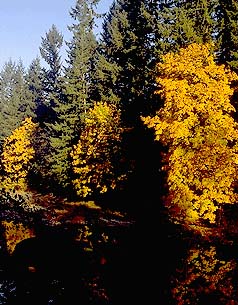
More Information: Fall Color - Landowner Factsheet
External Links: USDAFS Silvics of North America - USDAFS FEIS Silvics - USDA Plants Database - USDAFS Forest Products Lab
All material 2025 Virginia Tech Dept. of Forest Resources and Environmental Conservation; Photos and text by: John Seiler, Edward Jensen, Alex Niemiera, and John Peterson; Silvics reprinted from Ag Handbook 654; range map source information