 Virginia Tech Dendrology
northern catalpa Bignoniaceae Catalpa
speciosa (Warder) Warder ex Engelm.


 symbol: CASP8
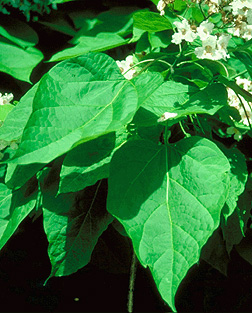
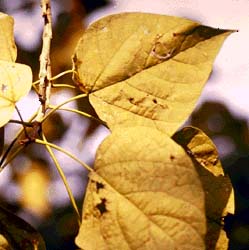
Leaf: Whorled (or opposite, when whorled one of the three leaves is often smaller), cordate, 5 to 12 inches long, pinnately veined, entire margins, overall soft and flexible feeling, light green to green above and soft pubescence on the underside.
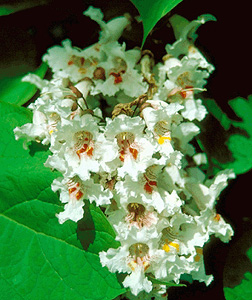
Flower: Species is monoecious; very showy, white (yellow and purple spots on insides), 5 fuzzy petals form an overall bell shape, 1 inch long; appear in open, branched, upright terminal cluster (8 to 12 inches long) in late spring.
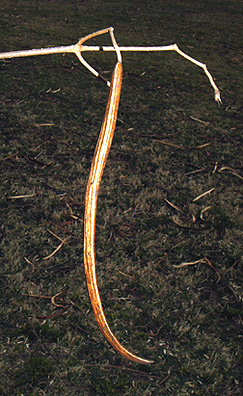
Fruit: Long (10 to 18 inches) bean-like, hanging capsules, round in cross section, very stiff; each capsule contains numerous flattened seeds with 2-papery, fringed wings; the seeds mature in autumn, but the capsule may remain attached over winter.
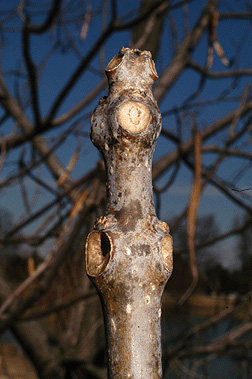
Twig: Stout, green, and later reddish brown in color, numerous lighter lenticels; terminal bud is absent, lateral buds are small and covered with red-brown scales; leaf scars very unique elliptical or round sunken saucers, light in color.
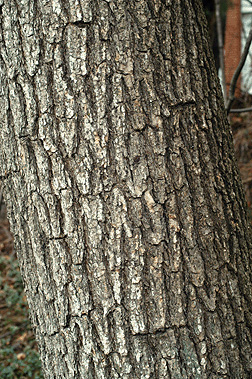
Bark: Gray to reddish brown, separated into irregular shallow fissures and scaly ridges.
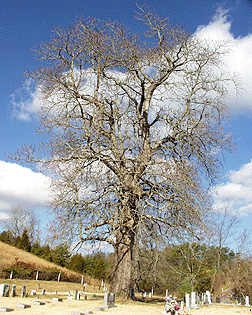
Form: A medium sized tree to 80 feet with spreading, crooked branches and an irregular crown. The bole may be straight but is generally crooked.
Looks like: southern catalpa
- royal paulownia
- dragon tree
- tungoil tree
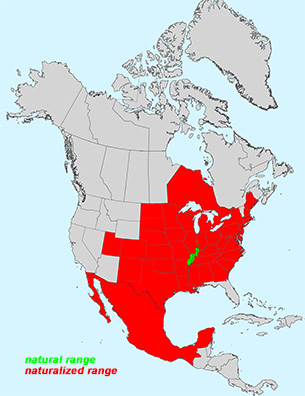
Additional Range Information: Catalpa speciosa is native to North America. Range may be expanded by planting. Download the full-size PDF map.
More Information: Fall Color
External Links: USDA Plants Database - Horticulture Information - USDAFS Forest Products Lab
All material 2025 Virginia Tech Dept. of Forest Resources and Environmental Conservation; Photos and text by: John Seiler, Edward Jensen, Alex Niemiera, and John Peterson; Silvics reprinted from Ag Handbook 654; range map source information