 Virginia Tech Dendrology
tungoil tree Euphorbiaceae Vernicia
fordii (Hemsl.) Airy-Shaw

 symbol: VEFO
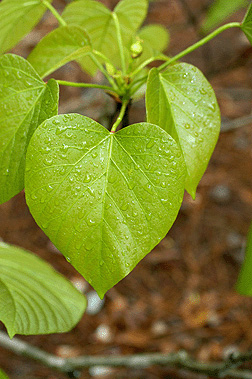
Leaf: Alternate, simple, 6 to 10 inches long and wide, heart-shaped or with 3 shallow, maple-like lobes, long petiole, green above and below, red conspicuous glands at the base of the leaf.
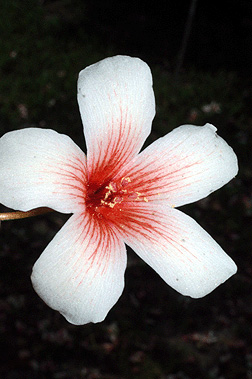
Flower: Species is monoecious; showy, 5 white petals with streaks of red or purple in the throat, several inches across when open, appear before or with the leaves in loose, terminal clusters.
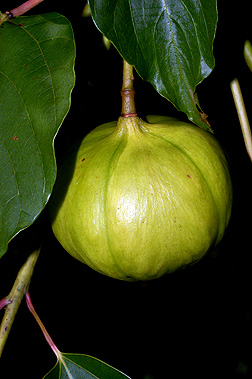
Fruit: Hard, woody, pear-shaped drupe, 1 1/2 to 3 inches across, containing usually 4 to 5 large, oily seeds, initially green but ripening to a purple-brown in late summer to early fall.
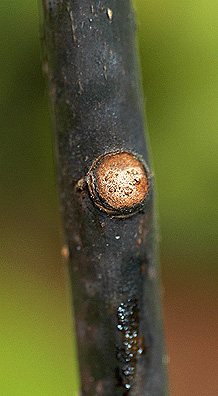
Twig: Dark gray-brown, numerous reddish lenticels, circular leaf scars.
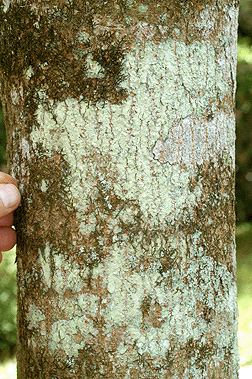
Bark: Smooth and thin, brownish gray developing very shallow, reddish brown furrows.
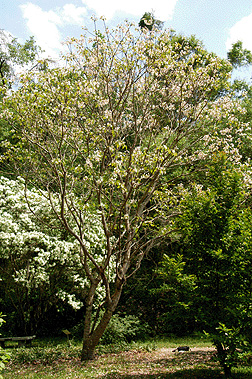
Form: A small tree up to 30 feet tall with a spreading round crown.
Looks like: northern catalpa
- southern catalpa
- dragon tree
- royal paulownia
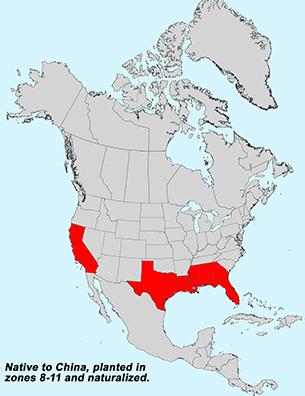
Additional Range Information: Vernicia fordii is planted in the USDA hardiness zones shown above and may seed into the landscape. Download the full-size PDF map.
External Links: USDA Plants Database
All material 2025 Virginia Tech Dept. of Forest Resources and Environmental Conservation; Photos and text by: John Seiler, Edward Jensen, Alex Niemiera, and John Peterson; Silvics reprinted from Ag Handbook 654; range map source information