 Virginia Tech Dendrology
Korean evodia Rutaceae Tetradium
daniellii (Benn.) T.G. Hartley

 symbol: TEDA
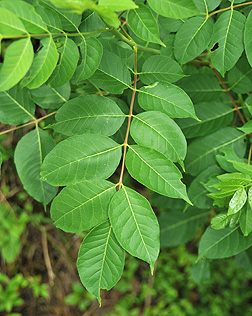
Leaf: Opposite, pinnately compound, 7 to 14 inches long, 7 to 11 ovate to oblong, entire leaflets (each up to 4 inches long), shiny dark green above, paler and initially hairy below.
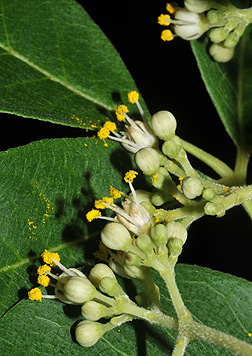
Flower: Small (1/4 inch), white with yellow anthers, in 3 to 6 inch branched clusters at the ends of twigs, fragrant, appearing in mid to late summer, quite abundant and conspicuous, very attractive to bees.
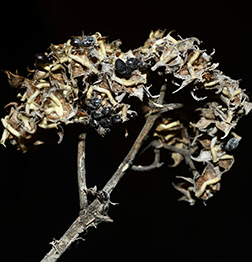
Fruit: Red to nearly black beaked capsules (1/4 inch) in large somewhat showy clusters, shiny black seeds inside, fruits ripen in late summer and persist through mid-winter.
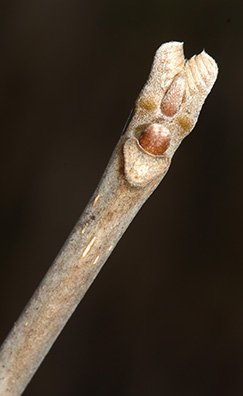
Twig: Medium to stout, somewhat angled, large heart-shaped leaf scar, small light brown buds sit nearly on top of leaf scar.
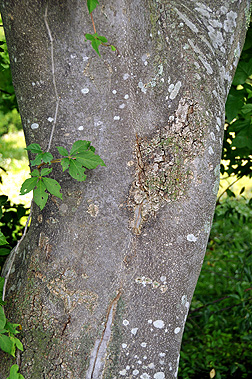
Bark: Smooth gray at all ages, lenticels are more prominent on young stems, older bark may have very shallow vertical furrows, in general the bark is similar to beech.
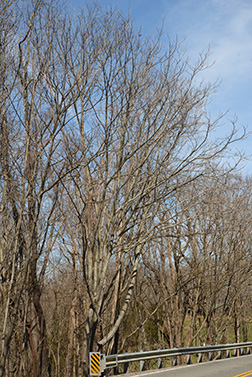
Form: A medium sized tree up to 50 feet in height, broadly spreading crown on a short trunk.
Looks like: Amur corktree
- white ash
- yellowwood
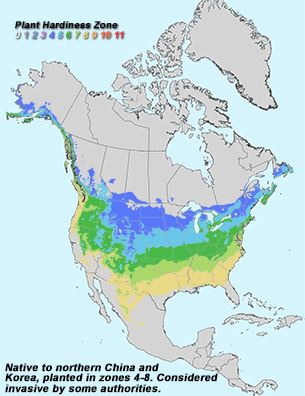
Additional Range Information: Tetradium daniellii is planted in the USDA hardiness zones shown above and is not known to widely escape cultivaton. Download the full-size PDF map.
External Links: USDA Plants Database - Horticulture Information
All material 2025 Virginia Tech Dept. of Forest Resources and Environmental Conservation; Photos and text by: John Seiler, Edward Jensen, Alex Niemiera, and John Peterson; Silvics reprinted from Ag Handbook 654; range map source information