 Virginia Tech Dendrology
white ash Oleaceae Fraxinus
americana L.


 symbol: FRAM2
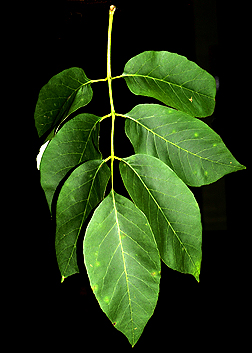
Leaf: Opposite, pinnately compound with 7 serrate to entire leaflets that are ovate to somewhat lanceolate, 8 to 12 inches long, essentially hairless, green above and slightly paler below.
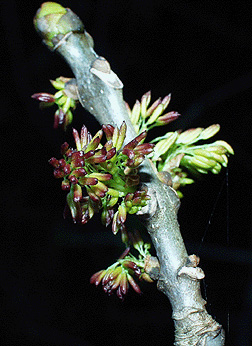
Flower: Species is dioecious; light green to purplish, both sexes lacking petals, females occuring in loose panicles, males in tighter clusters, appear after the leaves unfold.
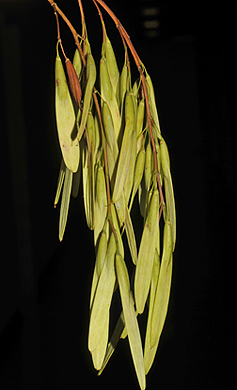
Fruit: A one-winged, dry, flattened samara with a full, rounded, seed cavity, maturing in fall and dispersing over winter.
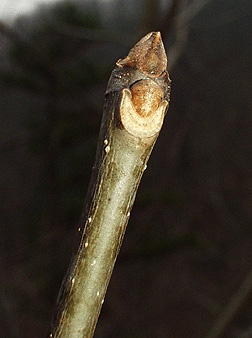
Twig: Stout, gray-olive-green, hairless, leaf scars round at the bottom, notched at the top, with lateral buds in the notch; terminal bud is large, brown, with leathery scales and flanked by two lateral buds.
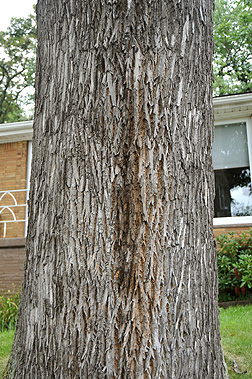
Bark: Ashy gray to brown in color, with interlacing corky ridges forming obvious diamonds; older trees may be scaly.
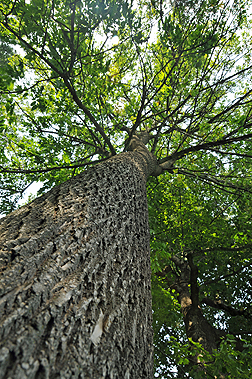
Form: A large tree up to 80 feet tall that typically develops a straight, clear bole (particularly on good sites), usually with a narrow oblong crown.
Looks like: green ash
- black ash
- blue ash
- boxelder
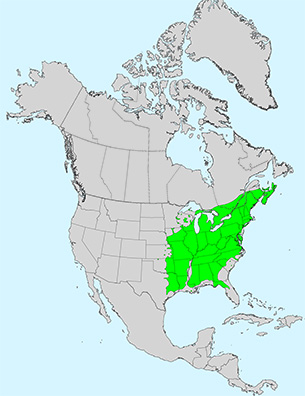
Additional Range Information: Fraxinus americana is native to North America. Range may be expanded by planting. Download the full-size PDF map.
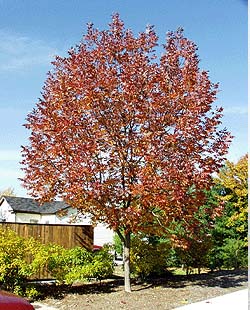
More Information: Fall Color - Wood
External Links: USDAFS Silvics of North America - USDAFS FEIS Silvics - USDA Plants Database - Horticulture Information - USDAFS Forest Products Lab
All material 2025 Virginia Tech Dept. of Forest Resources and Environmental Conservation; Photos and text by: John Seiler, Edward Jensen, Alex Niemiera, and John Peterson; Silvics reprinted from Ag Handbook 654; range map source information