 Virginia Tech Dendrology
Chinese elm Ulmaceae Ulmus
parvifolia Jacq.


 symbol: ULPA
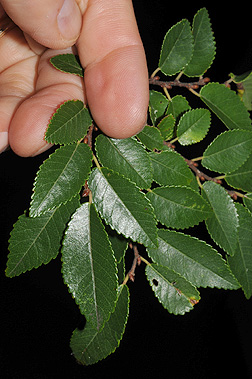
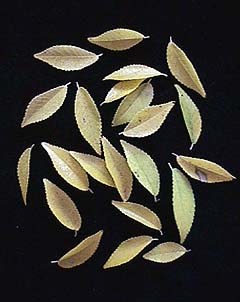
Leaf: Alternate, simple, elliptical to broadly lanceolate, up to 2 1/2 inches long, pinnately veined, serrate margin; base of leaf is conspicuously inequilateral, shiny dark green above and nearly glabrous, paler below.
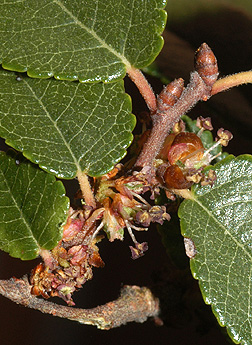
Flower: Species is monoecious; inconspicuous, light green in small tight clusters, appearing in late summer and early fall.
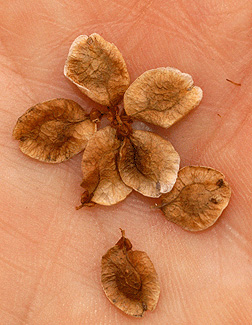
Fruit: A flattened, winged samara, nearly round but notched at the top, 1/2 inch long, light reddish brown, occur in tight clusters in the fall.
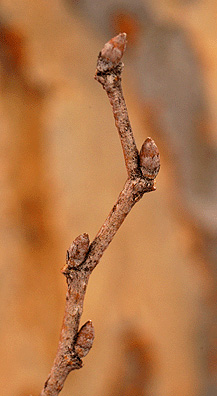
Twig: Slender, zigzag, brown, with obvious orange lenticels, maybe slightly pubescent; false terminal bud pushed over slightly to one side, quite small, ovate, reddish brown.
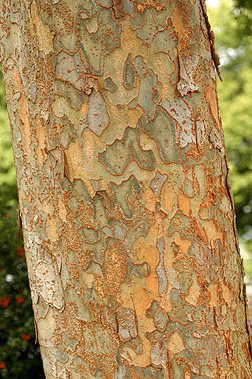
Bark: Very distinctive, even when young. Mottled green, gray and orange, jigsaw-like puzzle pieces separated by red-orange (inner bark). Trunk may become fluted.
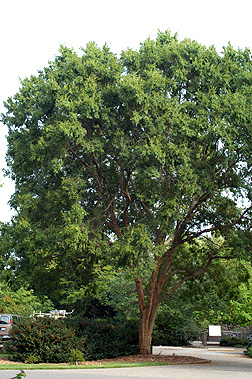
Form: A small tree reaching up to 70 feet tall with a graceful spreading wide crown made up of fine branches.
Looks like: Siberian elm
- Japanese zelkova
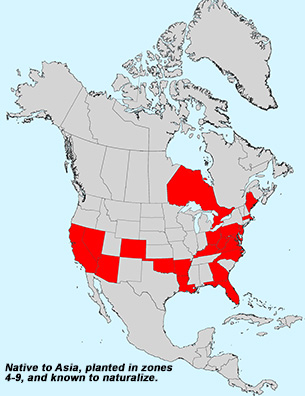
Additional Range Information: Ulmus parvifolia is planted in the USDA hardiness zones shown above and may seed into the landscape. Download the full-size PDF map.
More Information: Fall Color
External Links: USDA Plants Database - Horticulture Information
All material 2025 Virginia Tech Dept. of Forest Resources and Environmental Conservation; Photos and text by: John Seiler, Edward Jensen, Alex Niemiera, and John Peterson; Silvics reprinted from Ag Handbook 654; range map source information