 Virginia Tech Dendrology
mule fat Asteraceae Baccharis
salicifolia (Ruiz & Pav.) Pers.

 symbol: BASA4
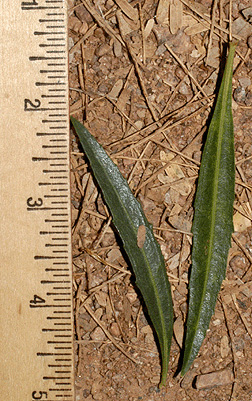
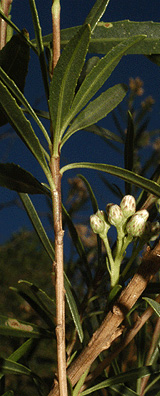
Leaf: Alternate, simple, evergreen, lanceolate, 3 to 5 inches long, widely spaced fine teeth, maybe sticky, shiny green above, paler below.
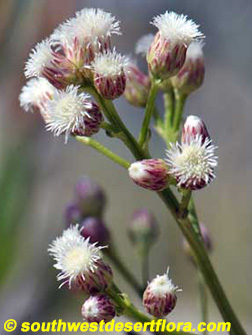
Flower: Species is dioecious; white, 1/2 inch across, displayed in open terminal flower heads or tighter clusters from axils, appear nearly year round.
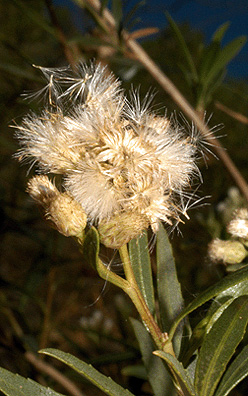
Fruit: A small achene tipped with long feathery white bristles (dandelion like), often in great abundance.
Twig: Very pithy, light brown to golden brown, sticky green when young. Leaf scars are narrow and raised.
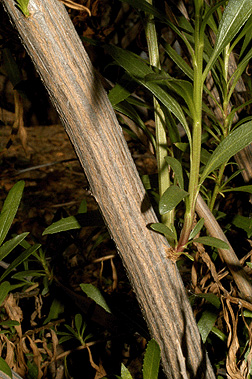
Bark: Grayish brown shallowly ridged with reddish furrows.
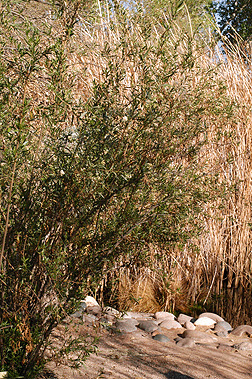
Form: An up to 8 foot tall, suckering, thicket forming shrub, generally graceful.
Looks like: arrow-weed
- sandbar willow
- coyotebrush
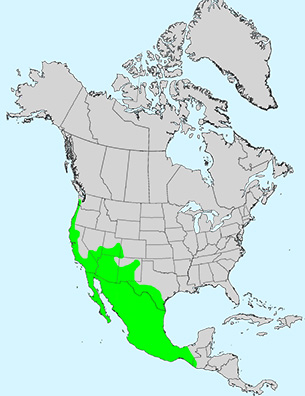
Additional Range Information: Baccharis salicifolia is native to North America. Range may be expanded by planting. Download the full-size PDF map.
External Links: USDA Plants Database
All material 2021 Virginia Tech Dept. of Forest Resources and Environmental Conservation; Photos and text by: John Seiler, Edward Jensen, Alex Niemiera, and John Peterson; Silvics reprinted from Ag Handbook 654; range map source information