 Virginia Tech Dendrology
beach plum Rosaceae Prunus
maritima Marshall

 symbol: PRMA2
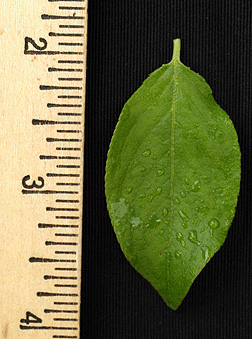
Leaf: Alternate, simple, deciduous, ovate to obovate (or round - var. gravesii), 1 1/2 to 2 1/2 inches long, finely serrated margin, green above, and slightly paler and pubescent beneath, glands present near leaf base.
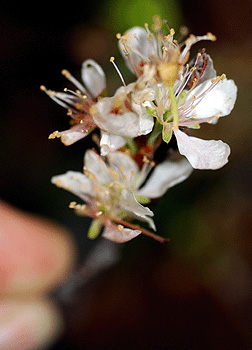
Flower: White, 5 petals, 1/2 inch across, long filaments, yellow anthers, appear singly or in small clusters in mid-spring.
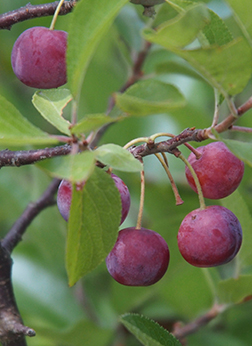
Fruit: Fleshy drupe, nearly round, up to 1 inch, crimson to blue-black (yellow - var. flava), some glaucous bloom, ripens late summer.
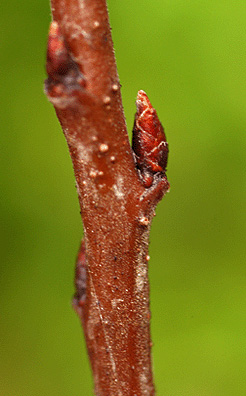
Twig: Slender, reddish brown, new growth with pubescence, buds reddish and sharp pointed; leaf scars raised.
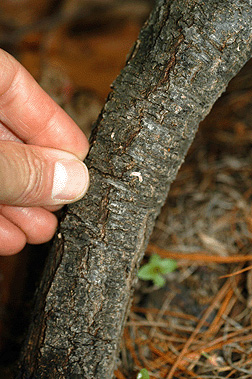
Bark: Initially reddish brown and smooth with numerous horizontal lenticels, later becoming dark and rough.
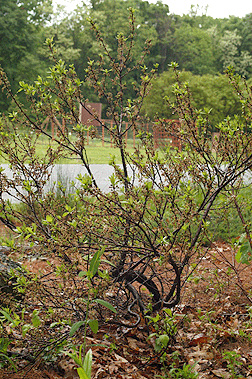
Form: A multi-stemmed shrub, generally to 4 feet in the wild, but to 10 feet when cultivated, generally with a spread equal to height, spreads by root suckering.
Looks like: American plum
- choke cherry
- Chickasaw plum
- chokeberry
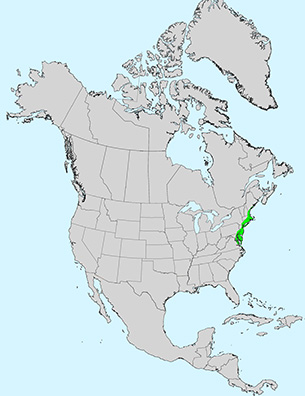
Additional Range Information: Prunus maritima is native to North America. Range may be expanded by planting. Download the full-size PDF map.
External Links: USDA Plants Database
All material 2025 Virginia Tech Dept. of Forest Resources and Environmental Conservation; Photos and text by: John Seiler, Edward Jensen, Alex Niemiera, and John Peterson; Silvics reprinted from Ag Handbook 654; range map source information