 Virginia Tech Dendrology
Chickasaw plum Rosaceae Prunus
angustifolia Marshall

 symbol: PRAN3
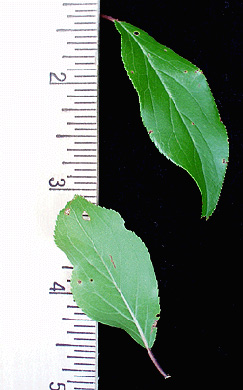
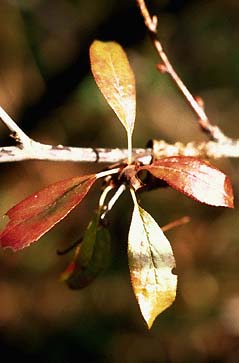
Leaf: Alternate, simple, oblong to lanceolate, fine rounded gland-tipped serrations, 1 1/2 to 3 inches long, shiny dark green above, dull and lighter beneath.
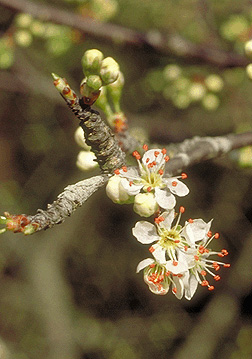
Flower: Small (1/3 inch), 5 white petals, reddish orange anthers, appear in clumps in early spring before the leaves.
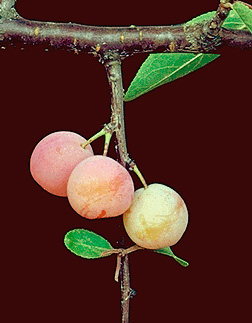
Fruit: Drupe, bright yellow to red, round to oval, 1/3 to 1/2 inch in diameter, flesh juicy, ripening in late summer.
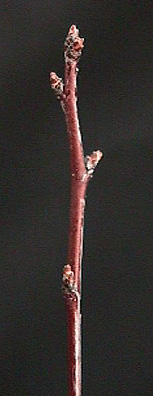
Twig: Slender, bright reddish brown, exfoliating grayish film, buds are small and reddish with loose scales, often with clusters of flower buds, leaf scars raised, may have thorny spurs.
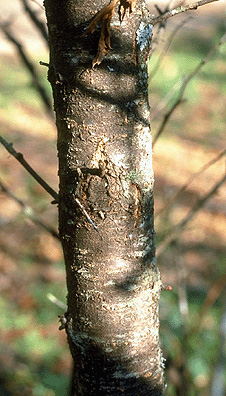
Bark: Initially smooth reddish with numerous elongated light lenticels, later developing cracks and splits and becoming rough scaly and shallowly furrowed.
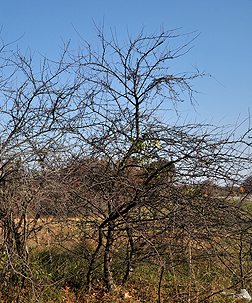
Form: A small shrubby tree, reaching heights of 20 feet, often found in dense thickets.
Looks like: American plum
- Mexican plum
- beach plum
- chokeberry
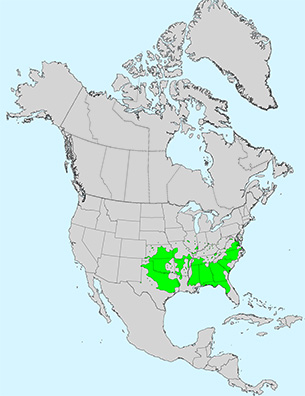
Additional Range Information: Prunus angustifolia is native to North America. Range may be expanded by planting. Download the full-size PDF map.
More Information: Fall Color
External Links: USDA Plants Database - Horticulture Information
All material 2025 Virginia Tech Dept. of Forest Resources and Environmental Conservation; Photos and text by: John Seiler, Edward Jensen, Alex Niemiera, and John Peterson; Silvics reprinted from Ag Handbook 654; range map source information