 Virginia Tech Dendrology
shining sumac Anacardiaceae Rhus
copallinum L.

 symbol: RHCO
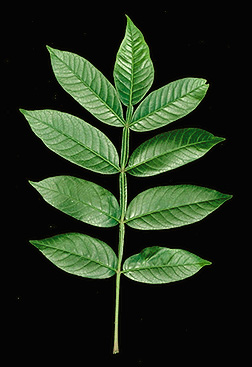
Leaf: Alternate, pinnately compound, up to 12 inches long, 7 to 15 leaflets per leaf; leaflets are lance-shaped, with entire margins, rachis has prominent wings between the leaflets, shiny, dark green above, paler and a bit fuzzy below.
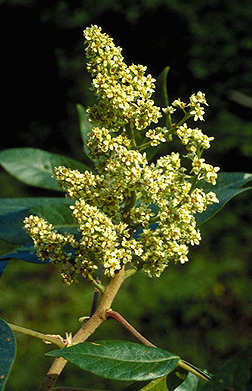
Flower: Species is monoecious; greenish-yellow and small, borne on 3 to 5 inch wide, terminal pyramid-shaped panicles in mid to late summer.
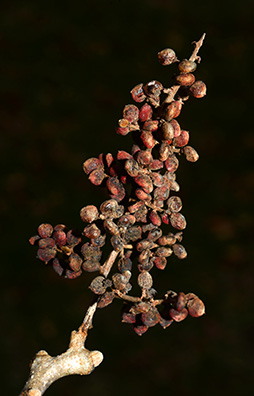
Fruit: A dark red, round drupe borne on terminal cluster, 1/8 inch long, covered with short, sticky, red hairs; matures in fall but present through winter.
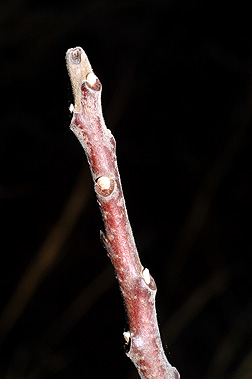
Twig: Medium-textured, speckled with lenticels, and covered with fine, velvety, reddish brown hair; buds are small, rounded and hairy, leaf scars horseshoe-shaped.
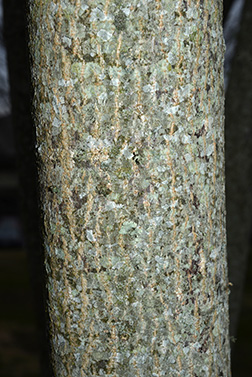
Bark: Light brown or gray, smooth with numerous lenticels when young, later with large, thin scales.
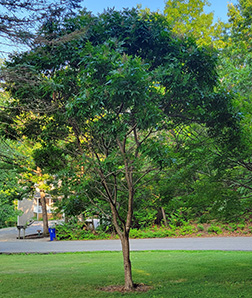
Form: A small tree or large shrub up to 25 feet with a short trunk and spreading branches.
Looks like: prairie sumac
- smooth sumac
- staghorn sumac
- poison sumac
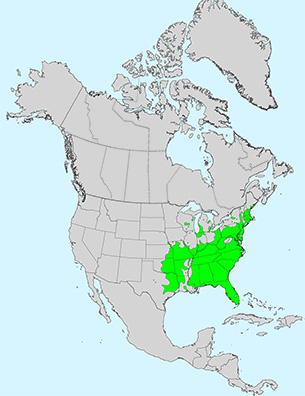
Additional Range Information: Rhus copallinum is native to North America. Range may be expanded by planting. Download the full-size PDF map.
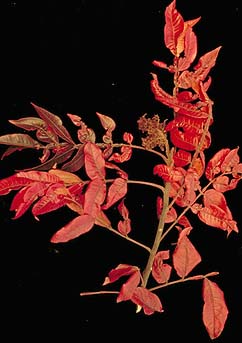
More Information: Fall Color
External Links: USDAFS FEIS Silvics - USDA Plants Database - Horticulture Information - USDAFS Forest Products Lab
All material 2025 Virginia Tech Dept. of Forest Resources and Environmental Conservation; Photos and text by: John Seiler, Edward Jensen, Alex Niemiera, and John Peterson; Silvics reprinted from Ag Handbook 654; range map source information