 Virginia Tech Dendrology
chestnut oak Fagaceae Quercus
montana Willd.


 symbol: QUMO4
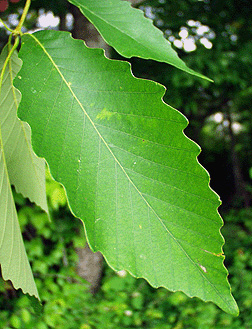
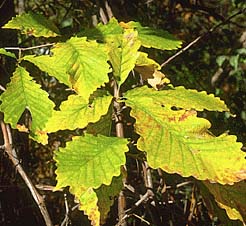
Leaf: Alternate, simple, 4 to 6 inches long, obovate to elliptical in shape with a crenate margin, shiny green above and paler below.
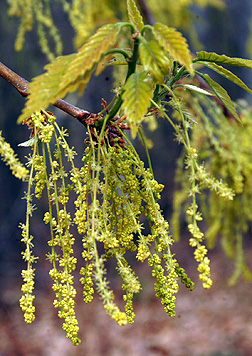
Flower: Species is monoecious; male flowers are yellow-green, borne in naked catkins, 2 to 4 inches long; female flowers are reddish and appear as single spikes, appearing with the leaves in mid-spring.
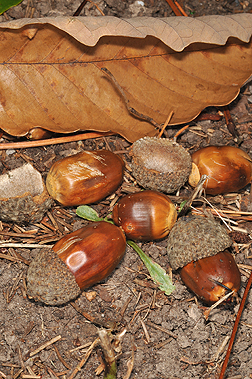
Fruit: Acorns are 1 to 1 1/2 inches long, ovoid in shape and separate from the cap when mature; cap is thin, warty and shaped like a teacup, edges of cap are very thin; matures in one growing season, ripening in the fall.
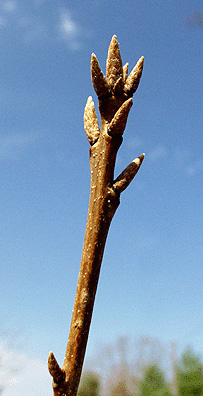
Twig: Medium textured, lacking hair, orange-brown or grayish in color with chestnut brown multiple terminal buds that are pointed, narrowly conical and quite long.
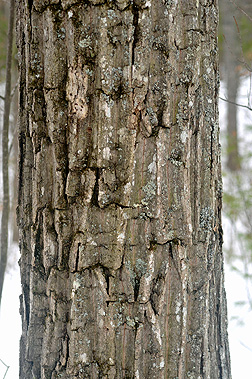
Bark: Gray-brown to brown, very smooth when young; developing hard and wide flat-topped ridges which later become thicker and more sharply pointed ridges; somewhat resembling the back of an alligator or ridge tops.
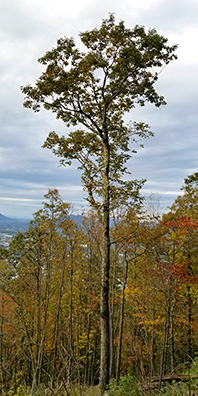
Form: A medium sized tree to 80 feet tall that on better sites will develop a straight trunk and narrow crown; on drier ridge tops it is much smaller with a crooked stem.
Looks like: chinkapin oak
- swamp white oak
- swamp chestnut oak
- dwarf chinquapin oak
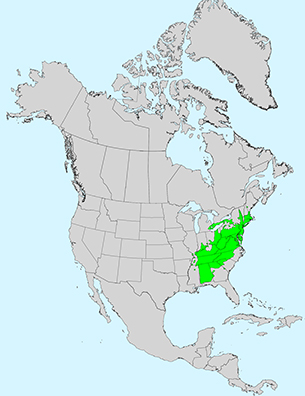
Additional Range Information: Quercus montana is native to North America. Range may be expanded by planting. Download the full-size PDF map.
More Information: Fall Color
External Links: USDAFS Silvics of North America - USDAFS FEIS Silvics - USDA Plants Database - Horticulture Information - USDAFS Forest Products Lab
All material 2025 Virginia Tech Dept. of Forest Resources and Environmental Conservation; Photos and text by: John Seiler, Edward Jensen, Alex Niemiera, and John Peterson; Silvics reprinted from Ag Handbook 654; range map source information