 Virginia Tech Dendrology
subalpine larch Pinaceae Larix
lyallii Parl.

 symbol: LALY
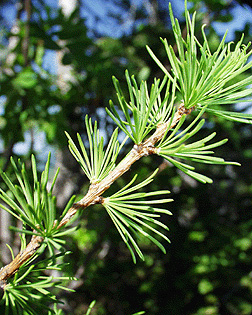
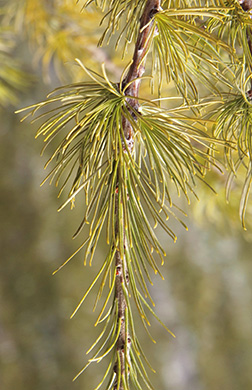
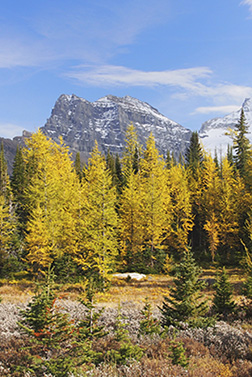
Leaf: Deciduous, linear, 1 to 1 1/4 inches long, somewhat square in cross section; borne singly on current year's twigs, but clustered on spur shoots on older twigs; light green to blue-green, yellow in the fall.
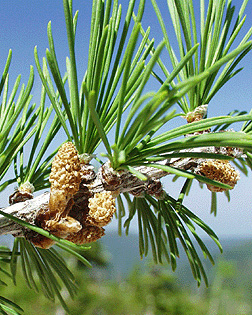
Flower: Species is monoecious; male cones are round to oblong and yellow to yellow-green in color; female cones are small, erect, and bright red when young.
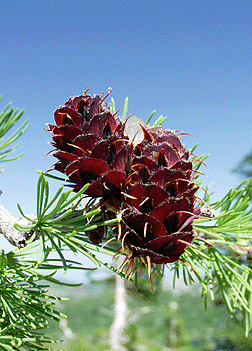
Fruit: Small (1 1/2 to 2 inches long), egg-shaped cones with thin, woody scales that are hairy at tips; bracts have spines that are longer than the cone scales (similar to Douglas-fir, but smaller); initially reddish purple but changing to dark brown.
Twig: Twigs are pale, yellowish brown and covered by fine hairs; buds small and fuzzy; spur shoots numerous.
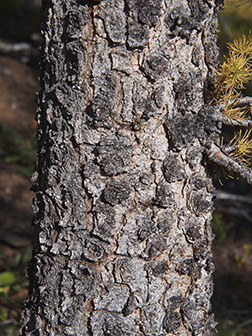
Bark: Young bark is thin, scaly, and light gray-brown, later becoming darker reddish brown and breaking up into small, scaly patches or plates; stays rather thin.
Form: A small deciduous conifer growing 30 to 50 feet tall and 1 to 2 feet in diameter, usually a straight bole with twisted, sparse limbs; at highest elevations near tree line they may be twisted and misshapen.
Looks like: western larch
- tamarack
- European larch
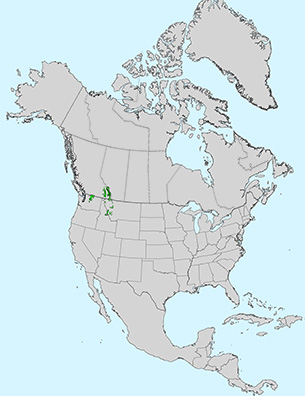
Additional Range Information: Larix lyallii is native to North America. Range may be expanded by planting. Download the full-size PDF map.
External Links: USDAFS Silvics of North America - USDAFS FEIS Silvics - USDA Plants Database
All material 2025 Virginia Tech Dept. of Forest Resources and Environmental Conservation; Photos and text by: John Seiler, Edward Jensen, Alex Niemiera, and John Peterson; Silvics reprinted from Ag Handbook 654; range map source information