 Virginia Tech Dendrology
European larch Pinaceae Larix
decidua Mill.


 symbol: LADE2
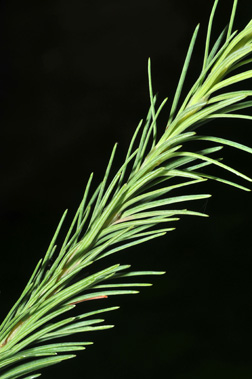
Leaf: Deciduous, appearing singly on new growth and in whorls on older growth, 1 inch long, light green in color.
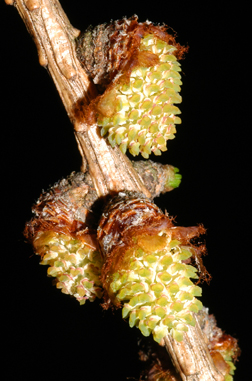
Flower: Species is monoecious; males light yellow, small and round; females yellow to red, with long, curved scales.
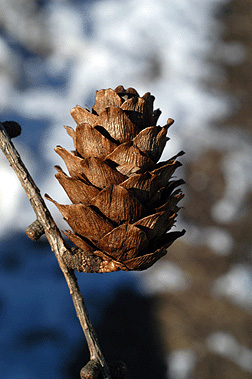
Fruit: Cones are 1 to 1 1/2 inches long, ovoid, composed of many scales that are longer than the bracts, borne upright on the twig, maturing fall to early winter.
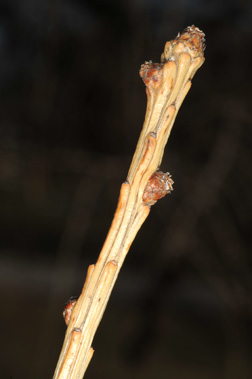
Twig: Straw-colored, bearing rounded buds. Spur shoots present on older growth, buds dark brown.
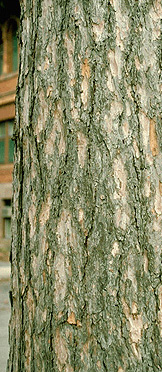
Bark: On young trees the bark is scaly and gray, later becoming furrowed with a reddish brown inner bark.
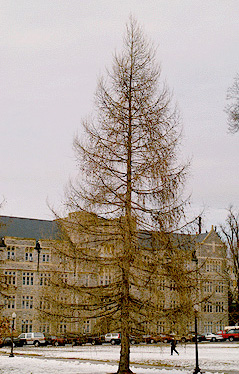
Form: Well formed, with a straight stem, pyramidal crown, and drooping lateral branches.
Looks like: Dunkeld larch
- Japanese larch
- tamarack
- western larch
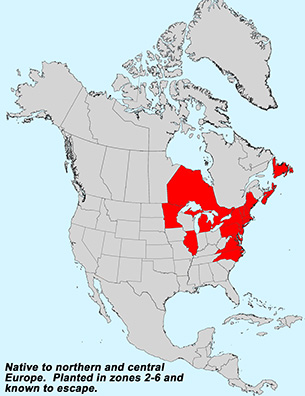
Additional Range Information: Larix decidua is planted in the USDA hardiness zones shown above and may seed into the landscape. Download the full-size PDF map.
External Links: USDAFS FEIS Silvics - USDA Plants Database
All material 2025 Virginia Tech Dept. of Forest Resources and Environmental Conservation; Photos and text by: John Seiler, Edward Jensen, Alex Niemiera, and John Peterson; Silvics reprinted from Ag Handbook 654; range map source information