 Virginia Tech Dendrology
Deodar cedar Pinaceae Cedrus
deodara (Roxb.) G. Don f.

 symbol: CEDE2
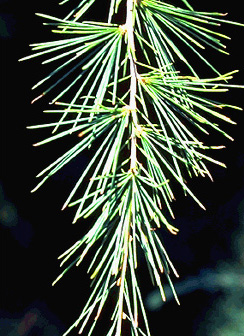
Leaf: Evergreen needles, dark green but may have some silvery bloom giving them a blue-green color; 1 to 2 inches long, sharp pointed; occur singly on new growth and than later on spur shoots; remaining on the tree for 3 to 6 years.
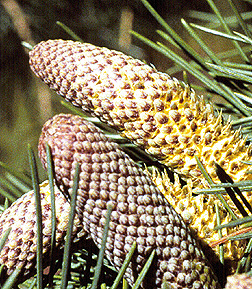
Flower: Species is monoecious; male cones 2 to 3 inches long on the lower parts of crown; female cones erect, purplish, occur on upper portions of crown.
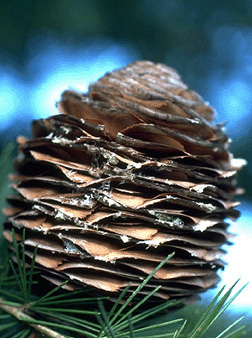
Fruit: Upright cones, 3 to 4 inches long and 3 inches across; deciduous scales; initially green and purplish, then later turning a reddish brown when mature, usually resinous.
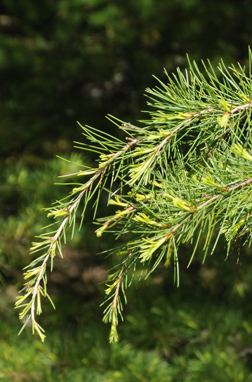
Twig: Slender, with numerous short spur shoots, branches droop with age; buds are very small and round.
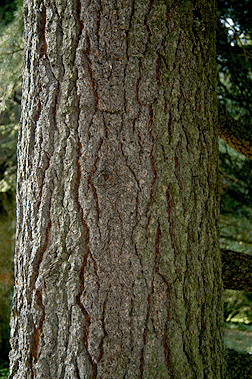
Bark: Initially smooth and gray-brown, later developing short furrows with scaly ridge tops.
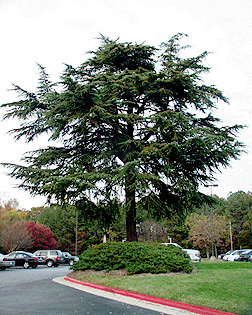
Form: Young trees have a broad pyramidal crown that becomes wider with age; branch tips and leaders droop and have a fine texture. In the landscape it can reach 80 feet tall but becomes much taller in its native range.
Looks like: Atlas cedar
- cedar of Lebanon
- European larch
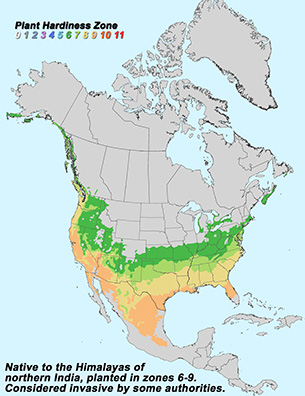
Additional Range Information: Cedrus deodara is planted in the USDA hardiness zones shown above and is not known to widely escape cultivaton. Download the full-size PDF map.
External Links: USDA Plants Database - Horticulture Information
All material 2021 Virginia Tech Dept. of Forest Resources and Environmental Conservation; Photos and text by: John Seiler, Edward Jensen, Alex Niemiera, and John Peterson; Silvics reprinted from Ag Handbook 654; range map source information