 Virginia Tech Dendrology
big sagebrush Asteraceae Artemisia
tridentata Nutt.

 symbol: ARTR2
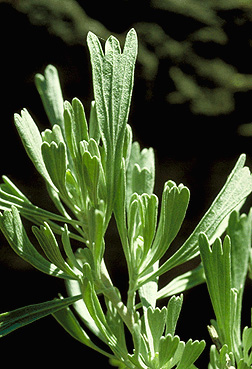
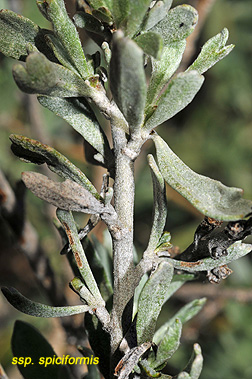
Leaf: Simple, alternate (but typically clustered at each node), persistent (but some leaves are drought deciduous). Small (1/2 to 2 inches long) and narrowly wedge-shaped with a 3-lobed apex; silvery-green and pubescent on both surfaces; strong scented; sessile.
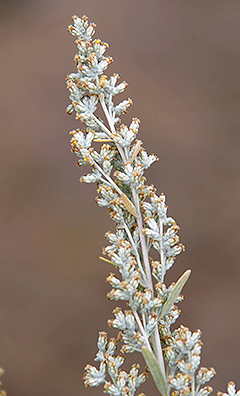
Flower: Species is monoecious; flowers very small, yellowish, and tubular; borne in small heads on long, upright spikes; some flowers perfect and some imperfect.
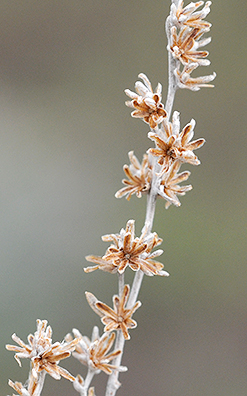
Fruit: Very small achenes; 4 or 5-sided or ribbed
Twig: Young twigs are slender, silvery-gray, and pubescent, becoming grayish brown as they age.
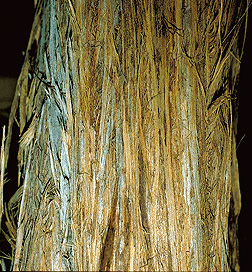
Bark: Grayish brown, shreddy, and splitting lengthwise.
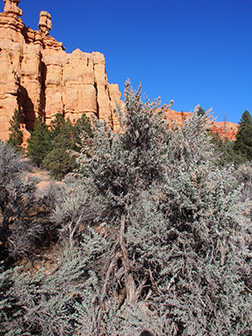
Form: An upright, evergreen shrub commonly growing from several to 15 feet tall.
Looks like: sand sagebrush
- bitterbrush
- Stansbury cliffrose
- Apache plume
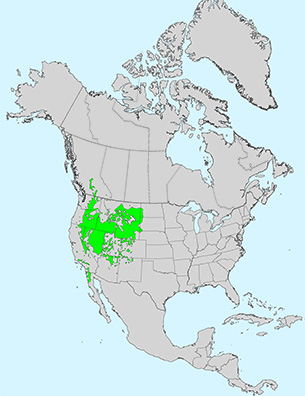
Additional Range Information: Artemisia tridentata is native to North America. Range may be expanded by planting. Download the full-size PDF map.
External Links: USDAFS FEIS Silvics - USDA Plants Database
All material 2025 Virginia Tech Dept. of Forest Resources and Environmental Conservation; Photos and text by: John Seiler, Edward Jensen, Alex Niemiera, and John Peterson; Silvics reprinted from Ag Handbook 654; range map source information