 Virginia Tech Dendrology
western juniper Cupressaceae Juniperus
occidentalis Hook.

 symbol: JUOC
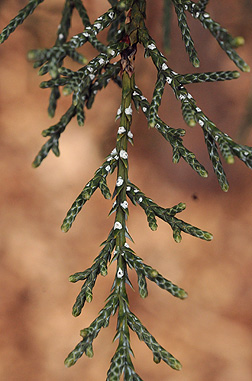
Leaf: Persistent, scale-like and awl-like (in combination), and mostly ternate (arranged in whorls of 3), although some are decussate (in pairs); appressed tightly to the twig, tips of awl-like needles are free of the twig. Back side of needles are glandular and resin dotted, very aromatic.
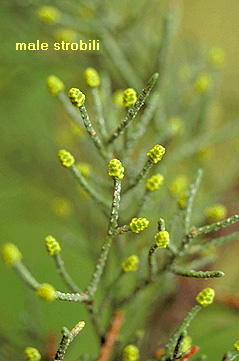
Flower: Species is mostly dioecious; rarely monoecious; male cones small, yellow, and terminal; female cones small, ovate, and at ends of branches.
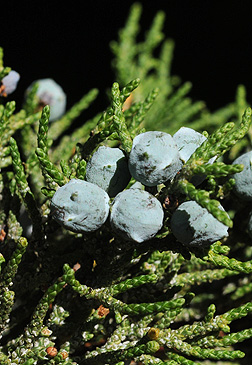
Fruit: Cones are small (about 1/4 inch diameter) and round with smooth, leathery scales; green when young and bluish black when mature, but always covered with white bloom, require 2 growing seasons to mature.
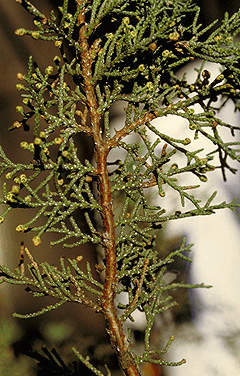
Twig: Round and reddish brown, smooth when young but becoming scaly with age.
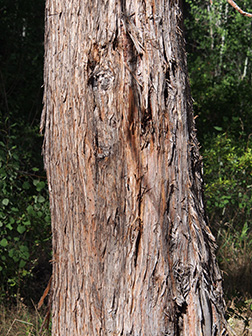
Bark: Mature bark is thin (less than 1 inch thick), reddish brown, but weathering to grayish brown with broad, shallow furrows and flattened ridges.
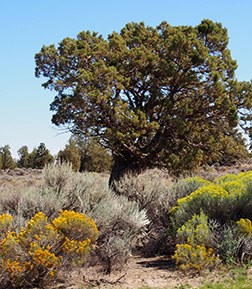
Form: Small, dry-site evergreen tree growing 20 to 60 feet tall and 1 to 3 feet in diameter; trunk is typically short, thick, and many-branched.
Looks like: California juniper
- Utah juniper
- common juniper
- Rocky Mountain juniper
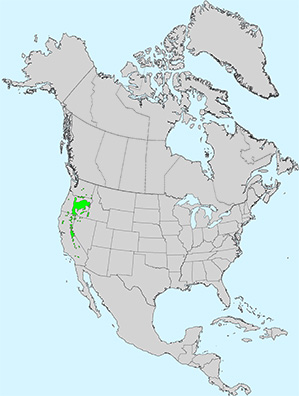
Additional Range Information: Juniperus occidentalis is native to North America. Range may be expanded by planting. Download the full-size PDF map.
External Links: USDAFS Silvics of North America - USDAFS FEIS Silvics - USDA Plants Database - USDAFS Forest Products Lab
All material 2021 Virginia Tech Dept. of Forest Resources and Environmental Conservation; Photos and text by: John Seiler, Edward Jensen, Alex Niemiera, and John Peterson; Silvics reprinted from Ag Handbook 654; range map source information