 Virginia Tech Dendrology
Rocky Mountain juniper Cupressaceae Juniperus
scopulorum Sarg.

 symbol: JUSC2
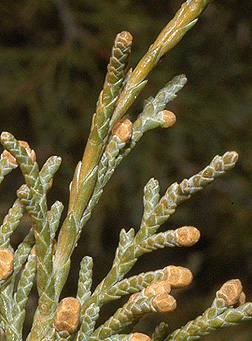
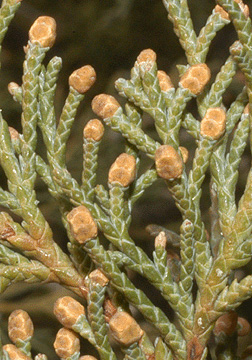
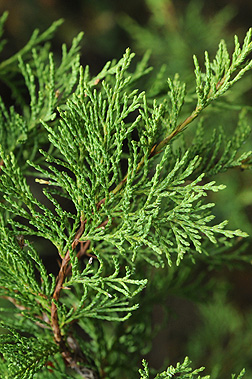
Leaf: Small (1/8 inch), scale-like and tight against the branches; green to gray-green. Back sides of needles bear inconspicuous glands.
Flower: Species is dioecious; both male and female flowers are small (1/8 inch) and occur at branch tips; males oblong and females nearly round and yellow, females greener.
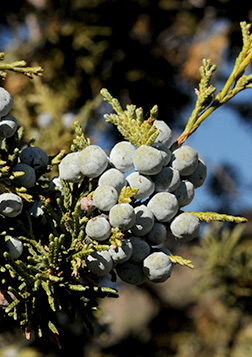
Fruit: Round, bluish berry-like cones (1/3 inch in diameter), covered in glaucous bloom, mature in two seasons.
Twig: Covered in green scale-like needles, later turning light brown.
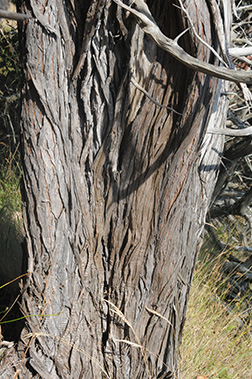
Bark: Thin and quite scaly with long narrow ridges, reddish brown but turns gray when aged and weathered.
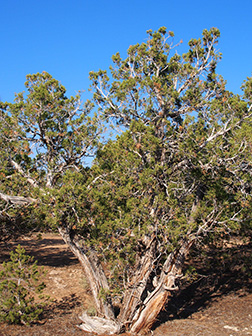
Form: Small tree or large shrub; shape is variable but often short with a round crown.
Looks like: western juniper
- Utah juniper
- alligator juniper
- oneseed juniper
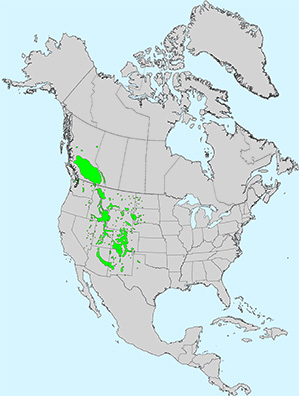
Additional Range Information: Juniperus scopulorum is native to North America. Range may be expanded by planting. Download the full-size PDF map.
External Links: USDAFS Silvics of North America - USDAFS FEIS Silvics - USDA Plants Database - Horticulture Information
All material 2025 Virginia Tech Dept. of Forest Resources and Environmental Conservation; Photos and text by: John Seiler, Edward Jensen, Alex Niemiera, and John Peterson; Silvics reprinted from Ag Handbook 654; range map source information