 Virginia Tech Dendrology
European cranberrybush viburnum Caprifoliaceae Viburnum
opulus var. opulus L.

 symbol: VIOPO
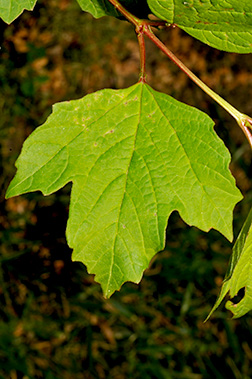
Leaf: Opposite, simple, 3 lobed and coarsely serrated, orbicular, 2 to 4 inches long, concave glands on petiole, dark green above, velvety below.
Flower: White, very showy, 1/2 inch across, occurring in large clusters, outer ring of flowers sterile and larger, many cultivators have only sterile flowers, appearing in mid-spring.
Fruit: Red, 1/4 inch drupe in clusters, ripening in late summer and persisting through the winter.
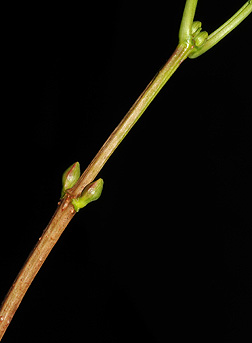
Twig: Moderate, tan to gray-brown, distinctly ridged, with numerous lenticels; green to reddish brown buds are plump and have 2 visible scales.
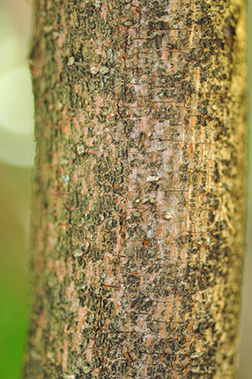
Bark: Light brown and stays largely smooth.
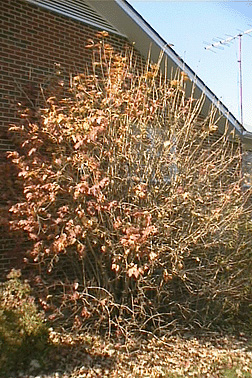
Form: Multiple, arching stemmed shrub to 10 feet tall.
Looks like: highbush-cranberry
- mapleleaf viburnum

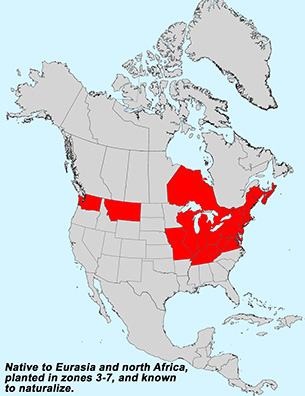
Additional Range Information: Viburnum opulus var. opulus is planted in the USDA hardiness zones shown above and may seed into the landscape. Download the full-size PDF map.
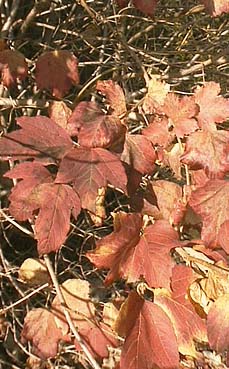
More Information: Fall Color
External Links: USDA Plants Database
All material 2025 Virginia Tech Dept. of Forest Resources and Environmental Conservation; Photos and text by: John Seiler, Edward Jensen, Alex Niemiera, and John Peterson; Silvics reprinted from Ag Handbook 654; range map source information