 Virginia Tech Dendrology
mapleleaf viburnum Caprifoliaceae Viburnum
acerifolium L.


 symbol: VIAC
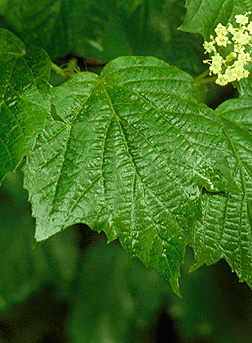
Leaf: Opposite, simple, suborbicular in shape, 3 to 4 inches long, 3-lobed, coarsely dentate, palmately veined with veins sunken on upper surface giving the leaf a slightly wrinkled look, pubescent below and on the petiole, green above and paler below.
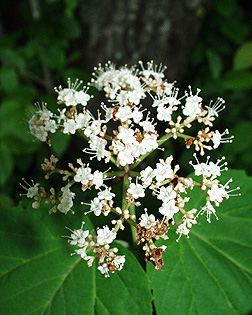
Flower: Species is monoecious; very small, white, appearing in flat topped clusters 1 1/2 to 3 inches across appearing in early summer.
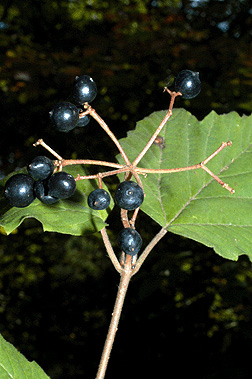
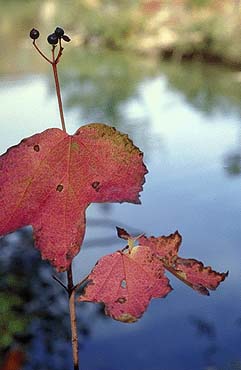
Fruit: Drupes, 1/4 inch in diameter, rounded, red turning purple to black when ripe, occur in flat topped clusters; maturing in fall.
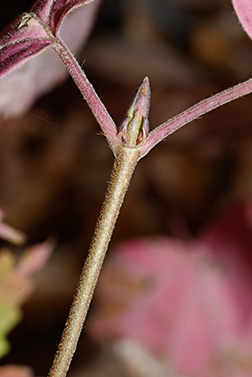
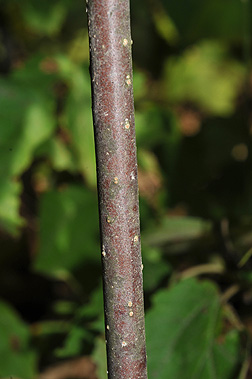
Twig: Slender, velvety-gray; buds ovoid, stalked with 4 dark purple scales.
Bark: Smooth, grayish brown.
Form: An upright suckering shrub that often grows in dense clumps and reaches up to 5 feet tall.
Looks like: highbush-cranberry
- arrowwood
- squashberry
- red maple

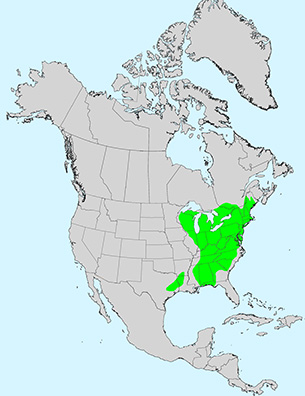
Additional Range Information: Viburnum acerifolium is native to North America. Range may be expanded by planting. Download the full-size PDF map.
More Information: Fall Color
External Links: USDAFS FEIS Silvics - USDA Plants Database
All material 2025 Virginia Tech Dept. of Forest Resources and Environmental Conservation; Photos and text by: John Seiler, Edward Jensen, Alex Niemiera, and John Peterson; Silvics reprinted from Ag Handbook 654; range map source information