 Virginia Tech Dendrology
quaking aspen Salicaceae Populus
tremuloides Michx.

 symbol: POTR5
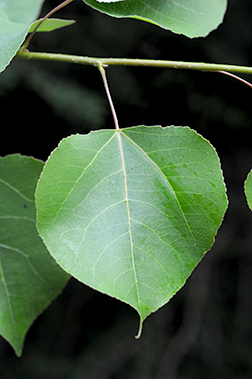
Leaf: Alternate, simple, 1 to 3 inches long, green above and paler below, heart-shaped to nearly round with a fine toothed margin, petiole is flattened.
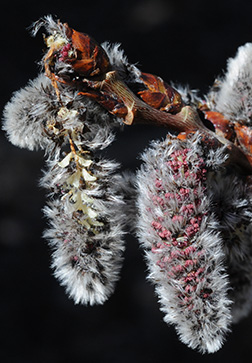
Flower: Species is dioecious; male and female hanging catkins 1 to 3 inches long.
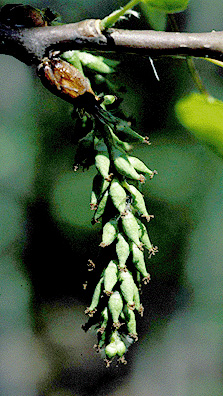
Fruit: Catkin (2 to 4 inches long), with attached light green capsules which contain many small hairy seeds.
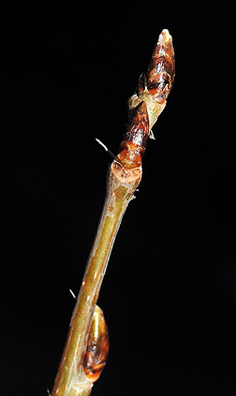
Twig: Slender, glabrous, reddish brown often with a gray, waxy film; buds conical, reddish brown, terminal bud 1/4 inch long, may be slightly resinous.
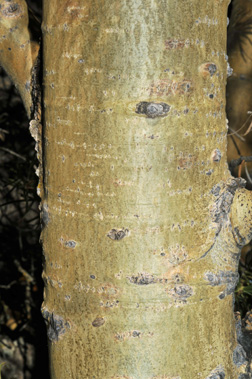
Bark: At first smooth, creamy yellowish-white to very light green; later developing thick furrows and becoming dark, especially near the base.
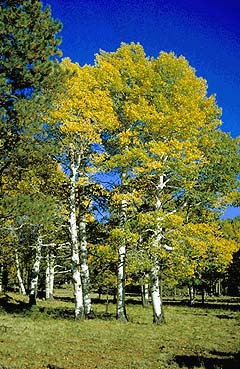
Form: Small (30 to 40 feet tall) upright tree, which often occurs in thickets.
Looks like: bigtooth aspen
- black cottonwood
- balsam poplar
- Fremont cottonwood
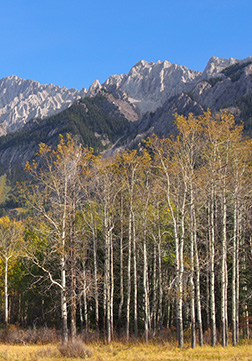
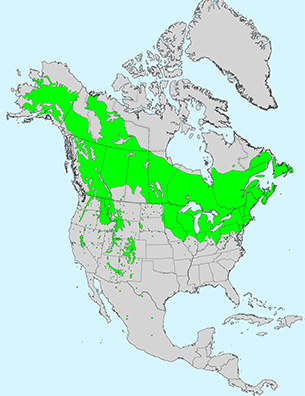
Additional Range Information: Populus tremuloides is native to North America. Range may be expanded by planting. Download the full-size PDF map.
More Information: Fall Color - Wood - Landowner Factsheet

External Links: USDAFS Silvics of North America - USDAFS FEIS Silvics - USDA Plants Database - USDAFS Forest Products Lab
All material 2025 Virginia Tech Dept. of Forest Resources and Environmental Conservation; Photos and text by: John Seiler, Edward Jensen, Alex Niemiera, and John Peterson; Silvics reprinted from Ag Handbook 654; range map source information