 Virginia Tech Dendrology
Japanese honeysuckle Caprifoliaceae Lonicera
japonica Thunb.


 symbol: LOJA
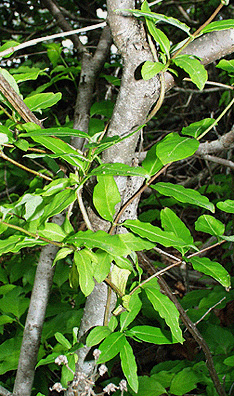
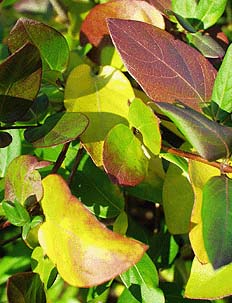
Leaf: Opposite, simple, ovate to oval, 1 to 2 inches long, entire margin, sometimes lobed, semi-evergreen, light green and somewhat pubescent.
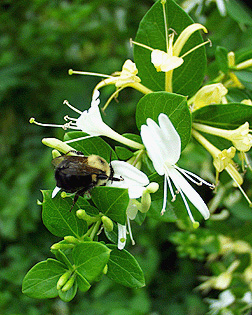
Flower: Fragrant, 1/2 to 1 inch long, white or yellowish-white long petals, appearing in late spring.
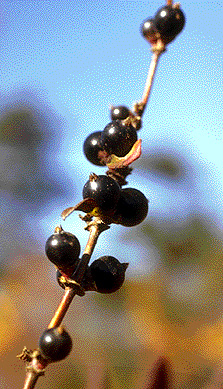
Fruit: Small (1/4 inch diameter), black berry, often in pairs, ripen in fall and persist into early winter.
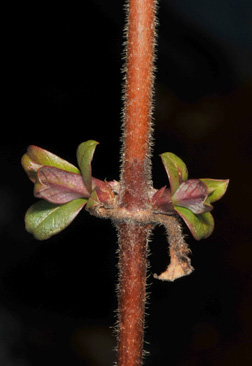
Twig: Slender, initially pubescent, light brown in color developing scaly, thin bark, hollow pith; buds small.
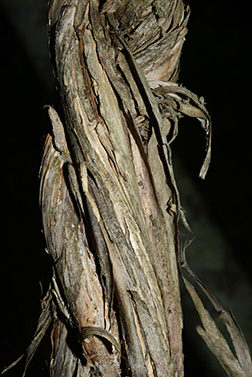
Bark: Long, shreddy peeling strips, light red-brown to straw-colored.
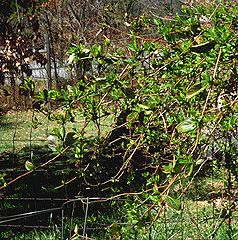
Form: A scrambling, twisting vine with no tendrils or aerial roots, forms dense thickets in bushes and trees and sprawls along the ground.
Looks like: Asian bittersweet
- false jessamine
- western trumpet honeysuckle
- pink honeysuckle
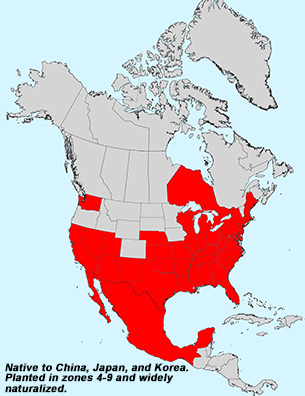
Additional Range Information: Lonicera japonica is planted in the USDA hardiness zones shown above and may seed into the landscape. Download the full-size PDF map.
More Information: Fall Color
External Links: USDAFS FEIS Silvics - USDA Plants Database
All material 2025 Virginia Tech Dept. of Forest Resources and Environmental Conservation; Photos and text by: John Seiler, Edward Jensen, Alex Niemiera, and John Peterson; Silvics reprinted from Ag Handbook 654; range map source information