 Virginia Tech Dendrology
Asian bittersweet Celastraceae Celastrus
orbiculatus Thunb.


 symbol: CEOR7
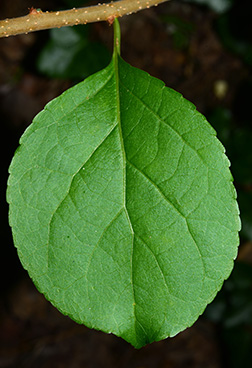
Leaf: Alternate, simple, ovate to nearly round, 2 to 4 inches long, very often with a blunt tip, finely serrated, somewhat rounded teeth, green above and slightly paler below.
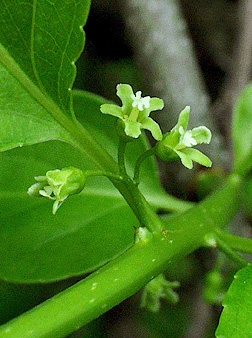
Flower: Inconspicuous, pale yellowish-green, appearing from leaf axils in late spring.
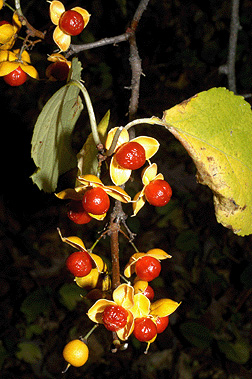
Fruit: Very attractive, capsules in clusters which when open expose a bright red seed surrounded by yellow scales, 1/3 inch across, appear from leaf axils; ripen in the fall and are visible throughout the winter.
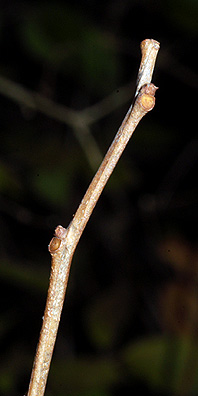
Twig: Thin, light brown, with small pointy buds at nearly right angles to the stems; no tendrils or aerial roots present.
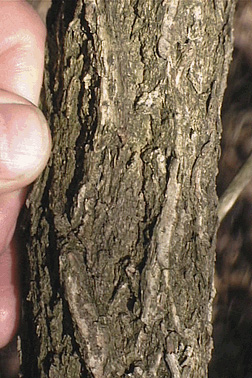
Bark: Silvery gray-brown, initially smooth, later corky with diamond-shaped patterns, much later becomes finely scaly.
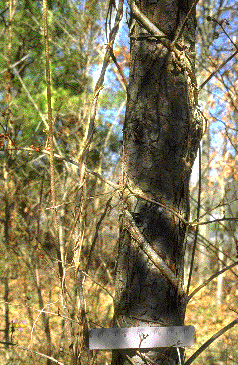
Form: Climbing vine, with an open, spiraling pattern. Forms dense thickets along fences. Some stems may become several inches in diameter.
Looks like: American bittersweet
- Japanese honeysuckle
- supplejack
- Dutchman's pipe
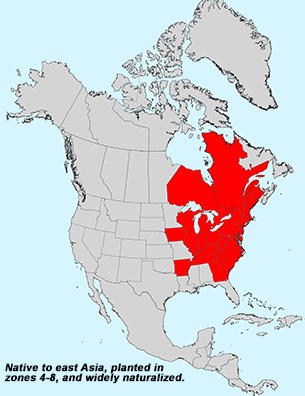
Additional Range Information: Celastrus orbiculatus is planted in the USDA hardiness zones shown above and may seed into the landscape. Download the full-size PDF map.
More Information: Fall Color

External Links: USDAFS FEIS Silvics - USDA Plants Database
All material 2025 Virginia Tech Dept. of Forest Resources and Environmental Conservation; Photos and text by: John Seiler, Edward Jensen, Alex Niemiera, and John Peterson; Silvics reprinted from Ag Handbook 654; range map source information