 Virginia Tech Dendrology
possumhaw viburnum Caprifoliaceae Viburnum
nudum L.

 symbol: VINU
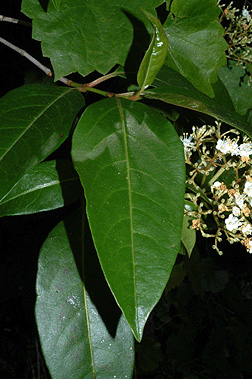
Leaf: Opposite, simple, elliptical, 3 to 5 inches long, margins entire or with rounded teeth (crenate), somewhat thickened; shiny green above, paler below, petiole rusty scruffy.
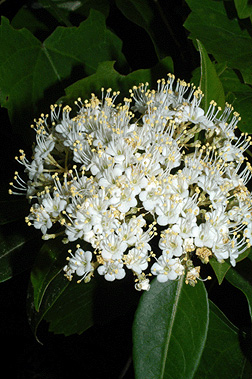
Flower: Small, creamy white, occurring in long stemmed flat-topped, spreading clusters; appearing in spring.
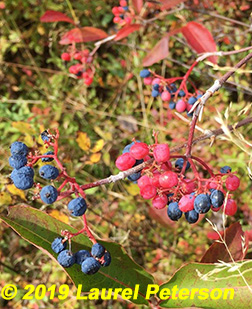
Fruit: Oval drupes, that are at first pinkish and later ripening to dark blue; 1/2 inch long; occurring in hanging clusters; ripen in the fall and persist through the winter.
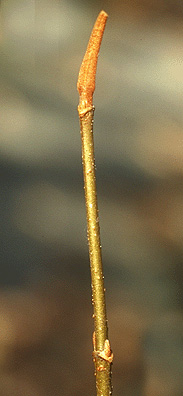
Twig: Slender, reddish brown, shiny; buds are valvate, slender and up to 1/2 inch long, scruffy pinkish brown; flower buds are similar but swollen.
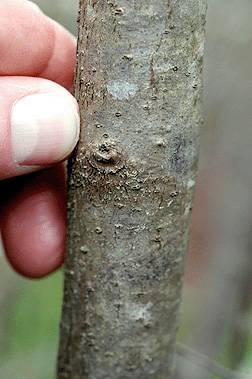
Bark: Smooth (may have a few raised warty lenticels), gray-brown.
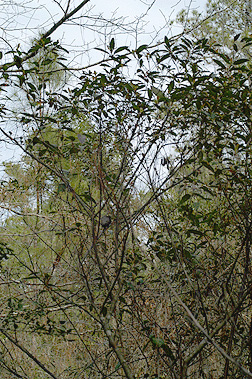
Form: A large shrub or small tree reaching up to 20 feet tall, with a spreading, round crown.
Looks like: rusty blackhaw
- nannyberry
- blackhaw
- hobblebush
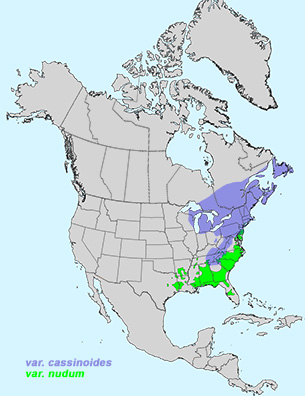
Additional Range Information: Viburnum nudum is native to North America. Range may be expanded by planting. Download the full-size PDF map.
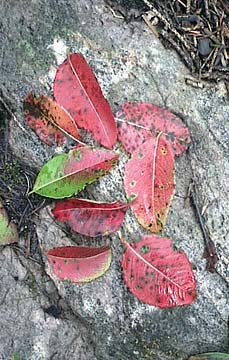
More Information: Fall Color
External Links: USDA Plants Database
All material 2025 Virginia Tech Dept. of Forest Resources and Environmental Conservation; Photos and text by: John Seiler, Edward Jensen, Alex Niemiera, and John Peterson; Silvics reprinted from Ag Handbook 654; range map source information