 Virginia Tech Dendrology
rusty blackhaw Caprifoliaceae Viburnum
rufidulum Raf.

 symbol: VIRU
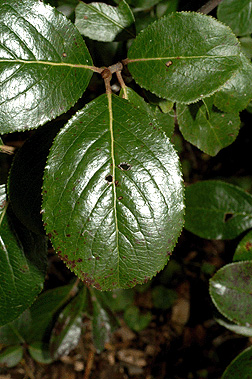
Leaf: Opposite, simple, finely serrated, oval to obovate, 1 to 3 inches long; petiole pinkish with a rusty pubescence and slightly winged; leaves shiny above, rusty hairy below.
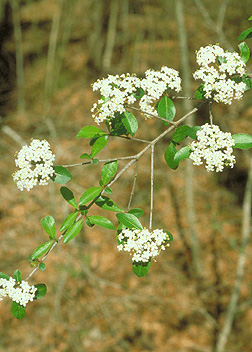
Flower: Flat topped clusters of small, white flowers, with 5 petals and yellow anthers; clusters 2 to 4 inches across, appear in early spring.
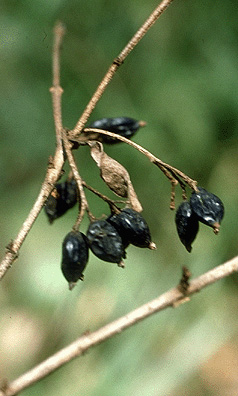
Fruit: Blue-black drupes, 1/4 inch long, waxy bloom, in hanging clusters, maturing in late summer.
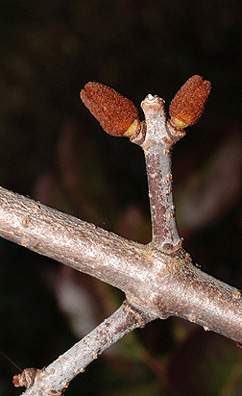
Twig: Slender, grayish to reddish brown, with numerous opposite short side branches; valvate buds are rusty in color, finely pubescent.
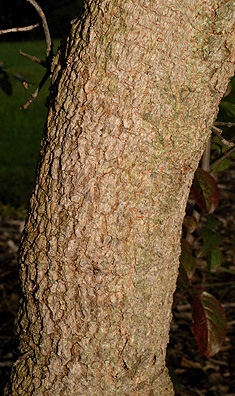
Bark: Grayish brown, developing a fine blocky pattern.
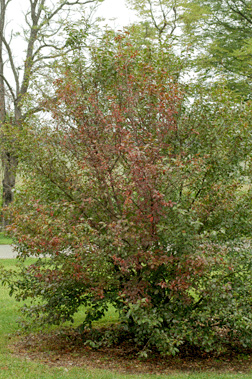
Form: A large shrub or small tree to 20 feet, trunk dividing near the ground and arching.
Looks like: blackhaw
- possumhaw viburnum
- nannyberry
- arrowwood
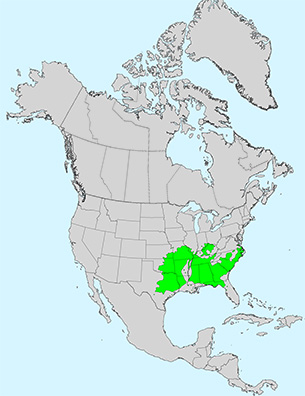
Additional Range Information: Viburnum rufidulum is native to North America. Range may be expanded by planting. Download the full-size PDF map.
External Links: USDA Plants Database - Horticulture Information
All material 2025 Virginia Tech Dept. of Forest Resources and Environmental Conservation; Photos and text by: John Seiler, Edward Jensen, Alex Niemiera, and John Peterson; Silvics reprinted from Ag Handbook 654; range map source information