 Virginia Tech Dendrology
trailing black currant Grossulariaceae Ribes
laxiflorum Pursh

 symbol: RILA3
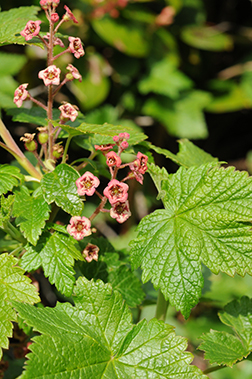
Leaf: Alternate, simple, deciduous, orbicular, palmately 5 or 7-lobed, serrated; to 4 inches; dark green and above, paler and somewhat glandular-hairy below; petiole with glandular hairs; with a strong odor when crushed.
Flower: Species is monoecious; very distinctive with reflexed yellow-green to coral-pink sepals surrounding much smaller red or pink petals; appearing on upright racemes of 6-8 flowers in spring.
Fruit: Pea-sized berries that are blue-black, glaucous, and hairy or bristly when ripe; edible but marginally palatable; ripening in mid-summer.
Twig: Red-brown to gray-brown, slightly pubescent, lacking thorns.
Bark: Red-brown to gray-brown.
Form: A spreading or trailing shrub to 3 feet tall; has been known to scramble or climb to more than 20 feet in length.
Looks like: spreading gooseberry
- prickly currant
- mountain gooseberry
- snow gooseberry



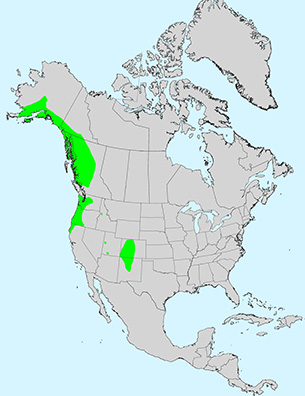
Additional Range Information: Ribes laxiflorum is native to North America. Range may be expanded by planting. Download the full-size PDF map.
External Links: USDA Plants Database
All material 2025 Virginia Tech Dept. of Forest Resources and Environmental Conservation; Photos and text by: John Seiler, Edward Jensen, Alex Niemiera, and John Peterson; Silvics reprinted from Ag Handbook 654; range map source information