 Virginia Tech Dendrology
Carolina hemlock Pinaceae Tsuga
caroliniana Engelm.


 symbol: TSCA2
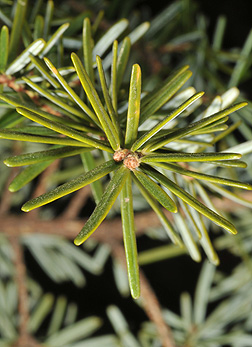
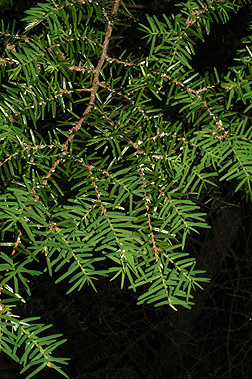
Leaf: Evergreen, flattened, single needles, 1/2 to 3/4 inch long, not tapering towards the round tip; dark green above, paler with two bluish-white stomatal lines beneath; needles radiate out from twig in all directions and are attached with a small petiole.
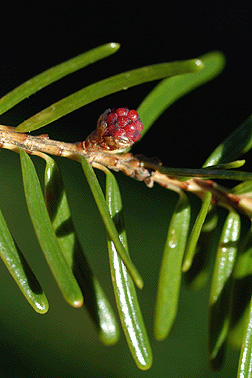
Flower: Species is monoecious; male cones small and yellowish; females small and greenish; both males and females occur near branch tips.
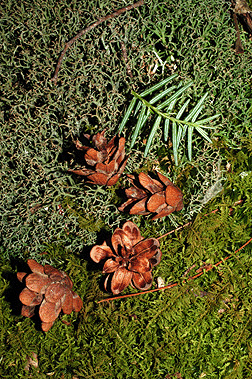
Fruit: Woody light brown cone, 1 to 1 1/2 inches, when dry scales stick out at nearly right angles, scales longer than they are wide.
Twig: Slender, yellowish brown, turning gray-brown, buds small and round.
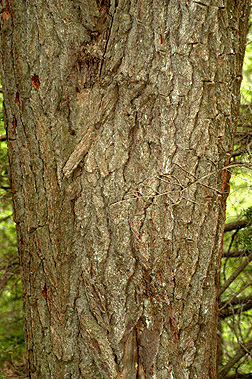
Bark: Dark, reddish brown, develops fissures with scaly ridges, inner bark often showing maroon patches.
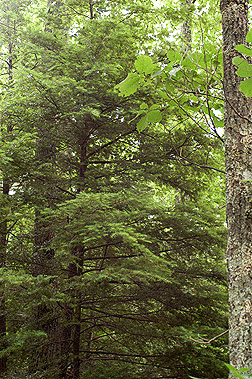
Form: Pyramidal crown with hanging branches, almost lacy looking. Reaches a height of 40 to 60 feet, 1 to 1 1/2 feet in diameter.
Looks like: eastern hemlock
- western hemlock
- mountain hemlock
- English yew
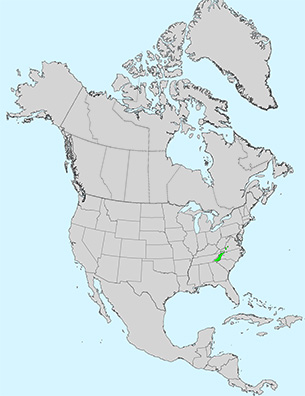
Additional Range Information: Tsuga caroliniana is native to North America. Range may be expanded by planting. Download the full-size PDF map.
External Links: USDAFS FEIS Silvics - USDA Plants Database
All material © 2021 Virginia Tech Dept. of Forest Resources and Environmental Conservation; Photos and text by: John Seiler, Edward Jensen, Alex Niemiera, and John Peterson; Silvics reprinted from Ag Handbook 654; range map source information