 Virginia Tech Dendrology
Alleghany chinkapin Fagaceae Castanea
pumila (L.) Mill.


 symbol: CAPU9
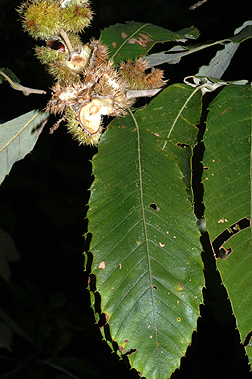
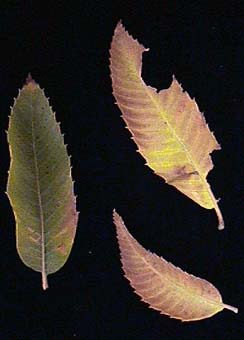
Leaf: Alternate, simple, oblong to lanceolate, 3 to 6 inches long, pinnately veined, coarsely toothed margin, green above and much lighter and fuzzy below.
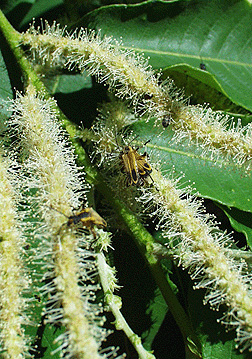
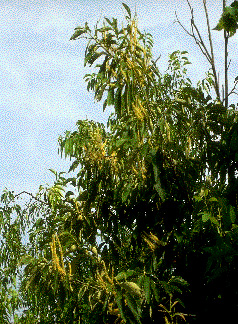
Flower: Species is monoecious; male flowers are small and pale yellow, borne on semi-upright catkins 4 to 6 inches long; female flowers are borne on the base of some of the same catkins, 1/8 inch long, appear in late spring.
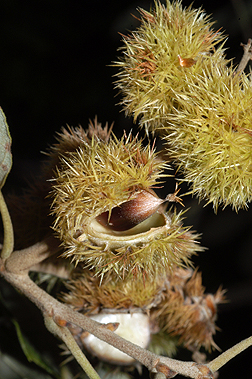
Fruit: Small, bur covered with sharp spines, 3/4 to 1 1/2 inches in diameter, often the burs occur in clusters on stems; each bur contains a single, shiny chestnut brown, ovoid nut. Nuts are edible and quite sweet when mature in the fall.
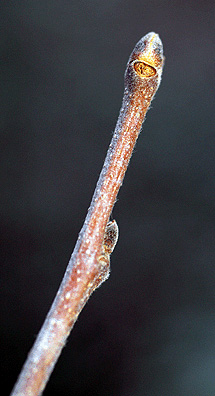
Twig: Slender to moderate, reddish brown, often with gray fuzz; buds are also gray-brown and fuzzy, covered with 2 to 3 visible bud scales.
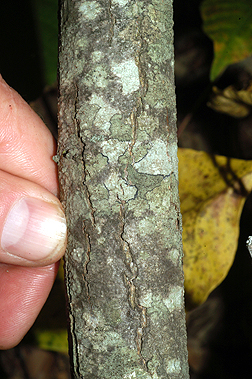
Bark: Light, reddish brown in color, shallowly furrowed with scaly plates on large stems.
Form: A large shrub or small tree up to 25 feet tall that can form dense thickets when growing in bright sunshine.
Looks like: American chestnut
- Chinese chestnut
- sawtooth oak
- American beech
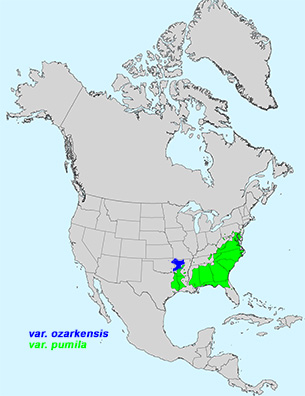
Additional Range Information: Castanea pumila is native to North America. Range may be expanded by planting. Download the full-size PDF map.
More Information: Fall Color
External Links: USDAFS FEIS Silvics - USDA Plants Database
All material 2025 Virginia Tech Dept. of Forest Resources and Environmental Conservation; Photos and text by: John Seiler, Edward Jensen, Alex Niemiera, and John Peterson; Silvics reprinted from Ag Handbook 654; range map source information