 Virginia Tech Dendrology
Japanese hornbeam Betulaceae Carpinus
japonica Blume

 symbol:
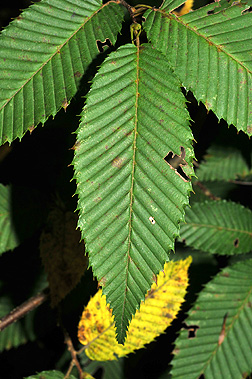
Leaf: Alternate, simple, elliptical to ovate, weakly heart-shaped base (or rounded), serrated, 2 to 4 inches long, pinnately veined, veins deeply sunken on upper surface giving the leaf a distinctly quilted look, slightly doubly serrated, waxy smooth, green above and paler below.
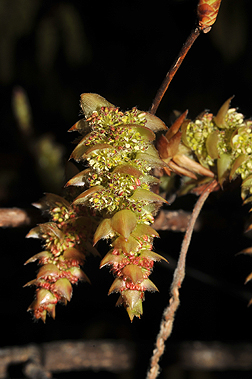
Flower: Species is monoecious; males slender, hanging catkins, yellow-green, 1 to 2 inches long; female catkins with more conspicuous leafy bracts, yellow green and 2 to 3 inches long; appearing in mid to late spring.
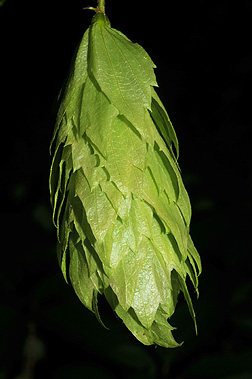
Fruit: Small, ribbed nutlet carried on a coarsely serrated, folded leafy bract (1 inch long), bracts are densely clustered on a 2 to 3 inch long hanging, sausage-shaped, showy cluster, ripen in early fall and disperse through the winter.
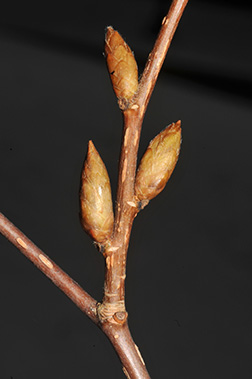
Twig: Slender, smooth, red brown, vertical lighter lenticels; 1/4 inch long cone-shaped buds are green turning to a light brown; flower buds larger and on older parts of twigs.
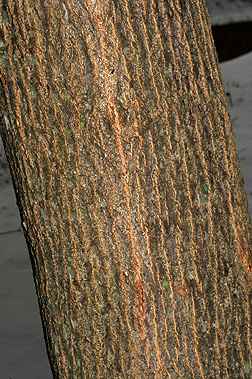
Bark: Thin, smooth gray brown when young, splitting into shallow furrows; distinctly fluted trunk.
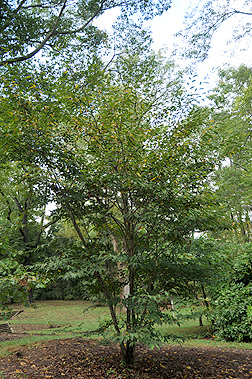
Form: A small tree reaching up to 30 feet tall with a dense v-shaped crown.
Looks like: European hornbeam
- hornbeam
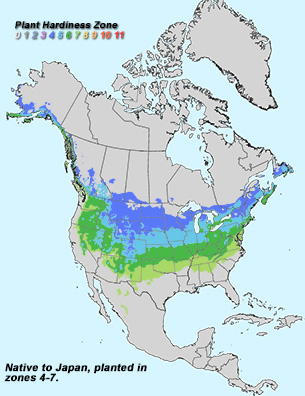
Additional Range Information: Carpinus japonica is planted in the USDA hardiness zones shown above and is not known to widely escape cultivaton. Download the full-size PDF map.
External Links: - USDAFS Forest Products Lab
All material 2025 Virginia Tech Dept. of Forest Resources and Environmental Conservation; Photos and text by: John Seiler, Edward Jensen, Alex Niemiera, and John Peterson; Silvics reprinted from Ag Handbook 654; range map source information