 Virginia Tech Dendrology
black hawthorn Rosaceae Crataegus
douglasii Lindl.

 symbol: CRDO2
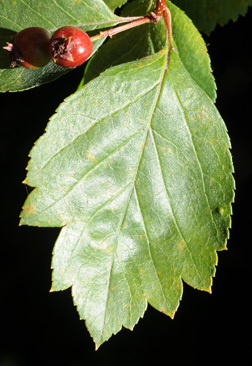
Leaf: Alternate, simple, 1 1/2 to 4 inches long, ovate or obovate, serrate to large-toothed but entire below the midpoint, subtending long thorns, dark green above and paler below.
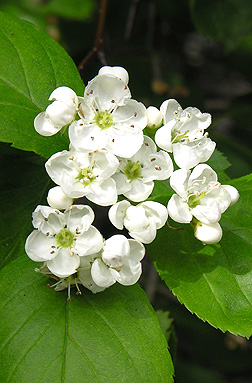
Flower: Perfect, small white flowers 1/4 to 1/2 inch, with 5 petals produced in clusters near the end of the twig, appearing in mid to late spring.
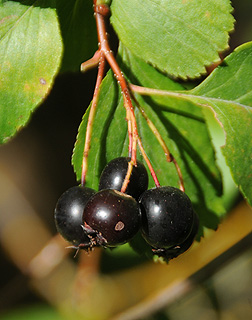
Fruit: Small red to black pomes, 1/4 to 1/2 inch in diameter, maturing in the early fall.
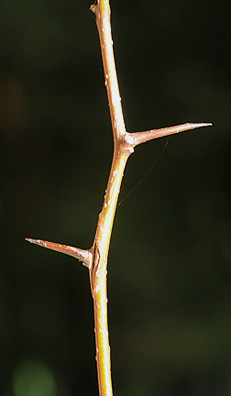
Twig: Slender, red-brown to gray; buds dark, shiny red and round; bearing obvious, stiff, 1 inch long thorns; leaf scars contain 3 bundle scars; spur shoots may be present.
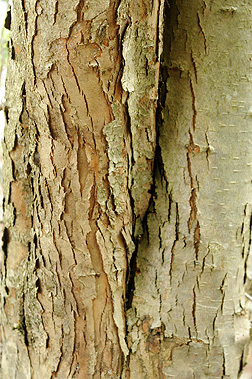
Bark: Smooth and red-brown when young, later turning gray and scaly.
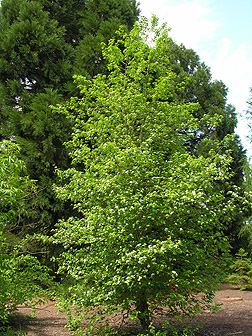
Form: Thicket-forming deciduous shrub to 10’ tall, or small tree to 35 feet tall with stems to 6 inches in diameter
Looks like: oceanspray
- Oregon crabapple
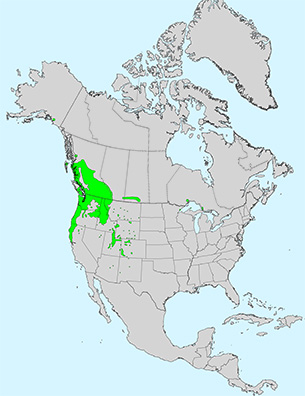
Additional Range Information: Crataegus douglasii is native to North America. Range may be expanded by planting. Download the full-size PDF map.
External Links: USDAFS FEIS Silvics - USDA Plants Database
All material 2021 Virginia Tech Dept. of Forest Resources and Environmental Conservation; Photos and text by: John Seiler, Edward Jensen, Alex Niemiera, and John Peterson; Silvics reprinted from Ag Handbook 654; range map source information