 Virginia Tech Dendrology
buffalo nut Santalaceae Pyrularia
pubera Michx.

 symbol: PYPU
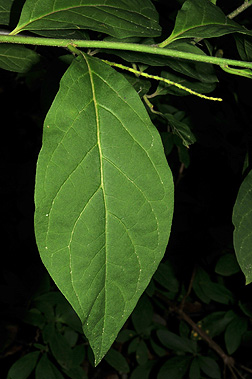
Leaf: Alternate, simple, deciduous, thin, ovate or narrowly elliptical, with long drawn-out tip, 2 to 9 inches long, entire to wavy margins, green above and below, usually pubescent on the underside, borne on short petioles.
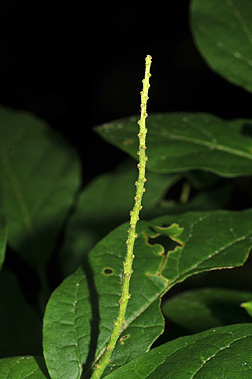
Flower: Species is dioecious; females yellow-green on 1 inch spikes, each with 10 or fewer flowers that lack petals; males yellow-green on 2 inch spikes; appearing late spring at the branch tips.
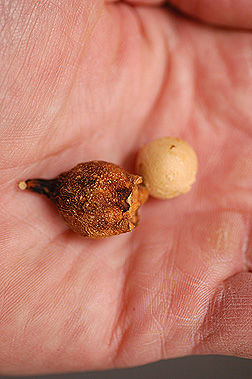
Fruit: Pear-shaped 1 inch drupe, yellow-green (yellow-red at maturity), with thin flesh splitting to reveal a large round oily "nut"; ripening in early autumn. TOXIC oil occurs throughout the plant but is concentrated in the nut.
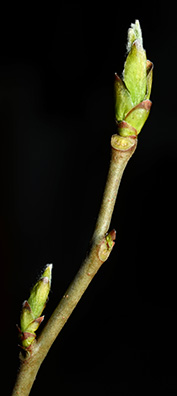
Twig: Moderate to slender, brown; buds large, green (eventually red-brown at the tips), oval and pointed; leaf scars round and raised with 1-3 bundle scars; pith large and white.
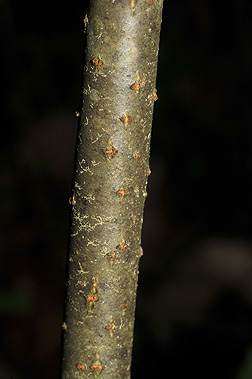
Bark: Gray-brown and warty.
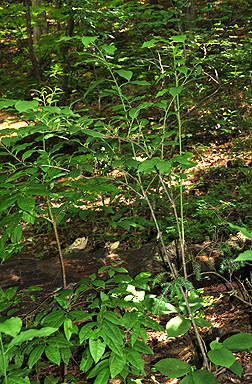
Form: A sparsely branched shrub reaching up to 15 feet but generally under 10 feet tall.
Looks like: blackgum
- eastern leatherwood
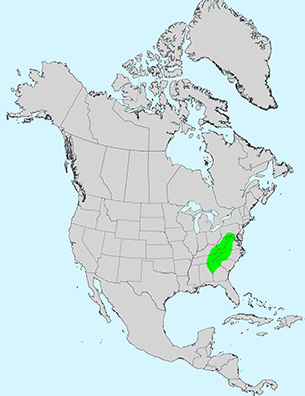
Additional Range Information: Pyrularia pubera is native to North America. Range may be expanded by planting. Download the full-size PDF map.
External Links: USDA Plants Database
All material 2021 Virginia Tech Dept. of Forest Resources and Environmental Conservation; Photos and text by: John Seiler, Edward Jensen, Alex Niemiera, and John Peterson; Silvics reprinted from Ag Handbook 654; range map source information