 Virginia Tech Dendrology
Baja fairy duster Fabaceae Calliandra
californica Benth.

 symbol: CACA82
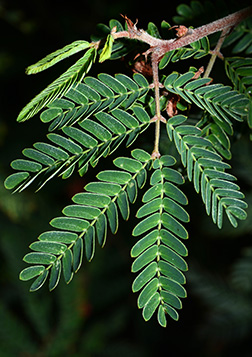
Leaf: Alternate, tardily deciduous to nearly evergreen, bipinnately compound, feathery, usually with 4 (sometimes 6) major leaflets, whole leaf up to 1 1/2 inches long, individual leaflets narrowly ovate to lanceolate, 1/8 to 1/4 inch long.
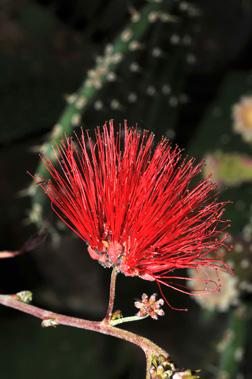
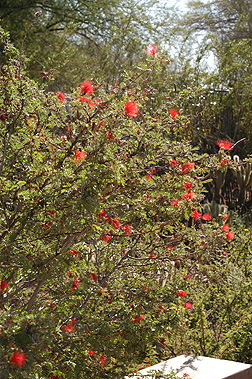
Flower: Very showy, occurring in rounded red, fluffy stamen heads. Individual flowers are small with long (to 2 inch) stamens, flowering heavily in late spring but may bloom nearly year-round.
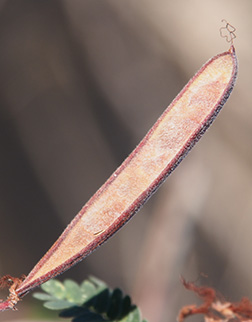
Fruit: Flattened, dry, brown, pubescent, pea-like pods, 2 inches long, popping open and ejecting seeds at maturity, curled open pods persisting on the twig.
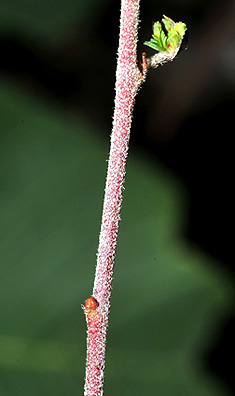
Twig: Slender, zigzag, gray-brown with fine pale pubescence, weak paired spines at the nodes.
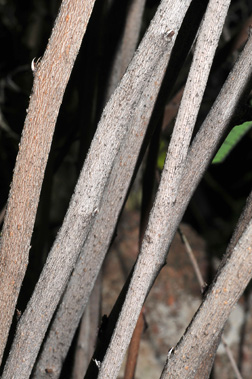
Bark: Smooth brown, weathering to gray.
Form: A loose shrub to 6 feet tall, generally wider than tall.
Looks like: fairy duster
- catclaw mimosa
- catclaw acacia
- screwbean mesquite
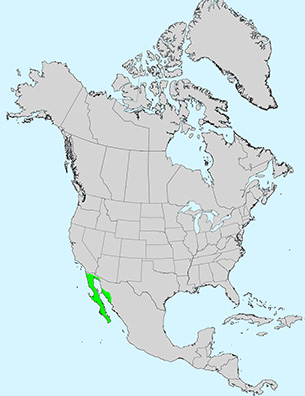
Additional Range Information: Calliandra californica is native to North America. Range may be expanded by planting. Download the full-size PDF map.
External Links: USDA Plants Database
All material 2025 Virginia Tech Dept. of Forest Resources and Environmental Conservation; Photos and text by: John Seiler, Edward Jensen, Alex Niemiera, and John Peterson; Silvics reprinted from Ag Handbook 654; range map source information