 Virginia Tech Dendrology
Turkish hazel Betulaceae Corylus
colurna L.

 symbol: COCO30
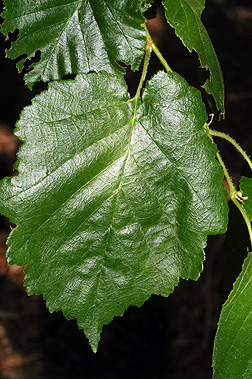
Leaf: Alternate, simple, with a doubly serrated margin, broadly oval to almost round with a heart-shaped or rounded base, dark green above and paler with some pubescence on veins below, 3 to 6 inches in length.
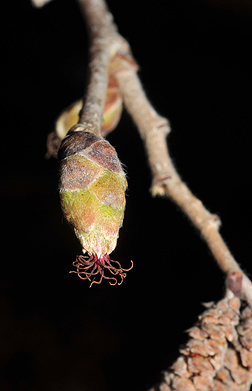
Flower: Species is monoecious; males are light brown 2 to 3 inch catkins, in clusters of two or three near branch tips, opening before leaves; females are inconspicuous with only bright red stigma and styles protruding from the otherwise gray-brown buds, appearing as short, thin, red threads, early spring. Males considered showy when they are open.
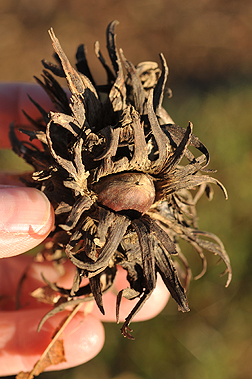
Fruit: Edible brown nuts (1/2 inch diameter), 3 or more enclosed in a bizarre spiky 2 inch ball of fused involucres that is initially green, ripening to a brown and splitting open in late summer.
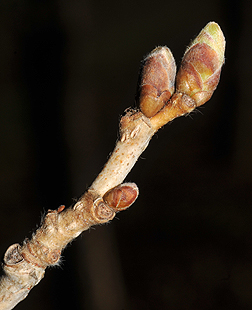
Twig: Slender to moderate, zigzag, gray-brown, nearly glabrous to covered with tan glandular pubescence; buds large, brown and yellow-green, oval to nearly round with few bud scales; twigs become fissured or corky.
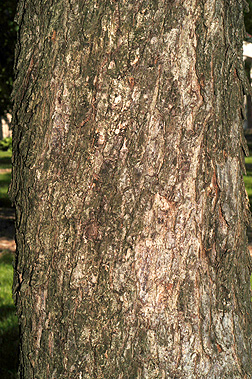
Bark: Grayish brown, developing scales that flake off to reveal orange-brown inner bark.
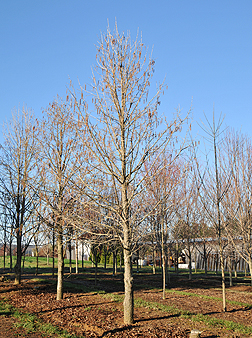
Form: The largest of the hazels, often growing to 50 feet and capable of over 80 feet; broadly pyramidal when young, open-grown trees develop a wide crown with a stout trunk with age.
Looks like: common filbert
- American hazel
- beaked hazel
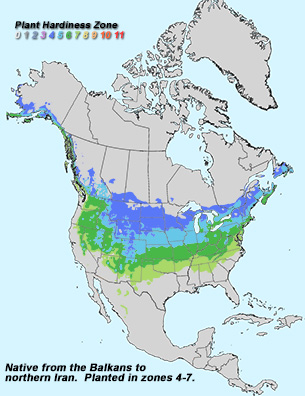
Additional Range Information: Corylus colurna is planted in the USDA hardiness zones shown above and is not known to widely escape cultivaton. Download the full-size PDF map.
External Links: USDA Plants Database - Horticulture Information
All material 2025 Virginia Tech Dept. of Forest Resources and Environmental Conservation; Photos and text by: John Seiler, Edward Jensen, Alex Niemiera, and John Peterson; Silvics reprinted from Ag Handbook 654; range map source information