 Virginia Tech Dendrology
Turkish pine Pinaceae Pinus
brutia Ten.

 symbol: PIBR9
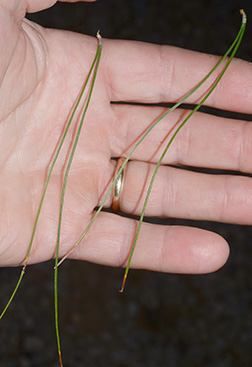
Leaf: Evergreen needles, 3 to 6 inhces long, 2 or 3 per fascicle, thin and irregularly twisted, bright green to blue green.
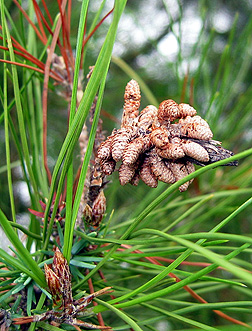
Flower: Species is monoecious; inconspicuous and not showy; male cones yellowish, female cones green. Photo courtesy Oana Popescu and Carol Loopstra, Texas A&M.
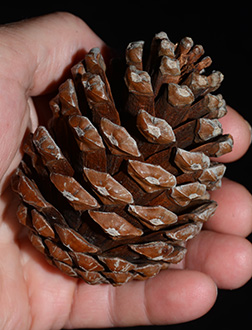
Fruit: Reddish brown ovate to oblong cone, 3 to 4 inches long.
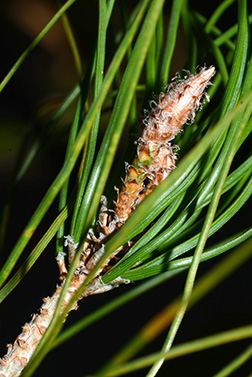
Twig: Moderately stout, reddish brown; buds narrowly ovoid, reddish brown.
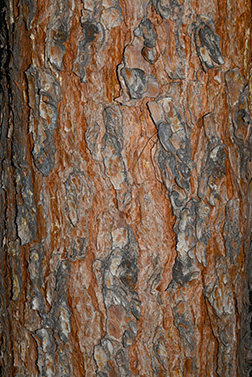
Bark: Silvery-gray for several years, attractive and smooth, becoming furrowed and darker.
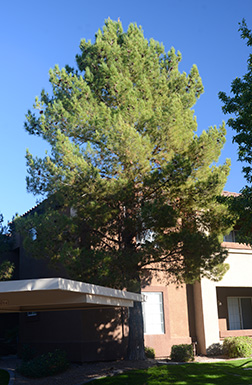
Form: Narrow pyramidal in youth, becoming more irregular with age.
Text courtesy Oana Popescu and Carol Loopstra, Texas A&M.
Looks like: Japanese black pine
- Austrian pine
- Aleppo pine
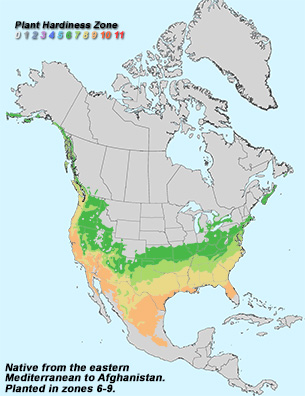
Additional Range Information: Pinus brutia is planted in the USDA hardiness zones shown above and is not known to widely escape cultivaton. Download the full-size PDF map.
External Links: USDA Plants Database - Horticulture Information
All material 2025 Virginia Tech Dept. of Forest Resources and Environmental Conservation; Photos and text by: John Seiler, Edward Jensen, Alex Niemiera, and John Peterson; Silvics reprinted from Ag Handbook 654; range map source information