 Virginia Tech Dendrology
American basswood Tiliaceae Tilia
americana L.


 symbol: TIAM
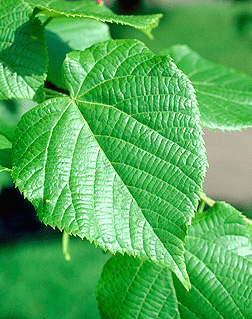
Leaf: Alternate, simple, ovate to cordate, 5 to 6 inches long, with serrate margins, pinnately veined, base is unequally cordate, green above and paler below.
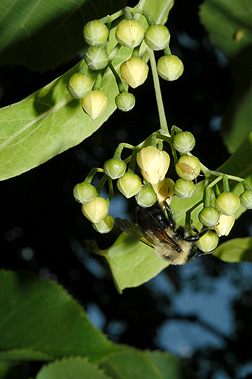
Flower: Species is monoecious; pale yellow, borne below a long, gracefully curving leafy wing in a many branched cluster, several inches long, appearing in early to mid-summer.
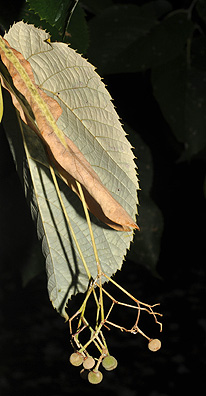
Fruit: A round nutlet (1/4 inch) that is covered with gray-brown hair; occur in a hanging cluster with a curving, leafy bract acting as wing on top of the cluster, ripening in the fall.
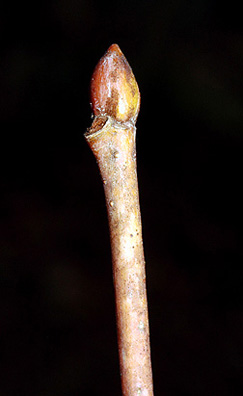
Twig: Moderately stout, zigzag, green (summer) or red (winter); terminal bud is false, each very plump with one side bulging out disproportionately. Buds are edible but very mucilaginous.
Bark: At first smooth and gray-green, later turning gray-brown and becoming ridged with long, shallow furrows and flat topped ridges. The bark is very fibrous.
Form: A medium sized tree to 80 feet. Older trees very often sprout from the base when cut. Stumps sprout prolifically, often resulting in clumps of several trees.
Looks like: littleleaf linden
- silver linden
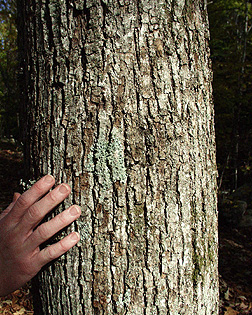
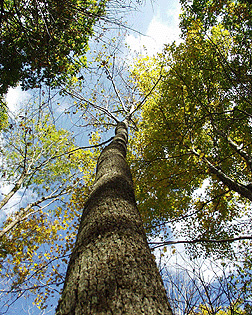
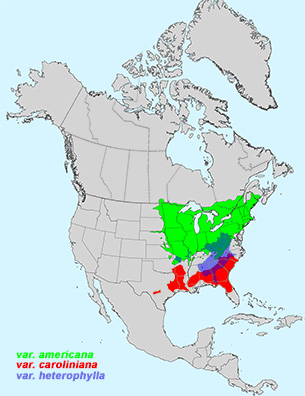
Additional Range Information: Tilia americana is native to North America. Range may be expanded by planting. Download the full-size PDF map.
More Information: Fall Color - Wood
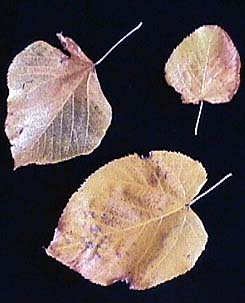

External Links: USDAFS Silvics of North America - USDAFS FEIS Silvics - USDA Plants Database - Horticulture Information - USDAFS Forest Products Lab
All material 2025 Virginia Tech Dept. of Forest Resources and Environmental Conservation; Photos and text by: John Seiler, Edward Jensen, Alex Niemiera, and John Peterson; Silvics reprinted from Ag Handbook 654; range map source information