 Virginia Tech Dendrology
virgin's bower Ranunculaceae Clematis
drummondii Torr. & A. Gray

 symbol: CLDR
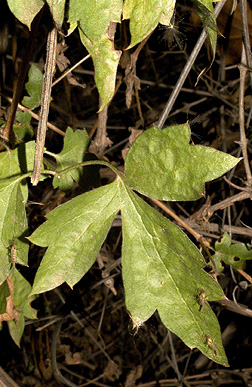
Leaf: Opposite, deciduous, pinnately compound with 5 to 7 leaflets, individual leaflets with 3 very deep lobes or unlobed, to 3 inches, and toothed; both the long petiolules and the rachis commonly wrap around other structures to aid in climbing.
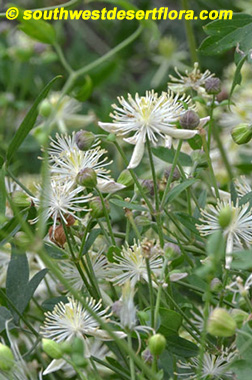
Flower: Species is dioecious; not showy, greenish white with 4 sepals that subtend showier stamens or pistils, 1 to 1 1/4 inches across, borne on branching panicles, present early summer.
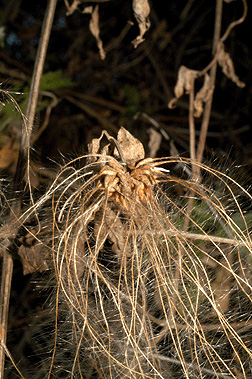
Fruit: An achene with small dry brown seeds with a 3 inch white feathery plume, borne in showy heads, maturing in the fall, more showy than the flowers.
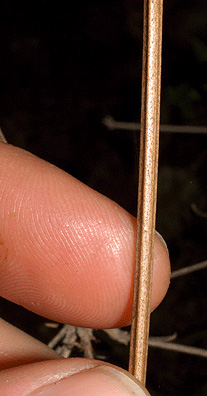
Twig: Initially pale green and somewhat pubescent, becoming brown and glabrous, ridged, wiry, climbs by twining.
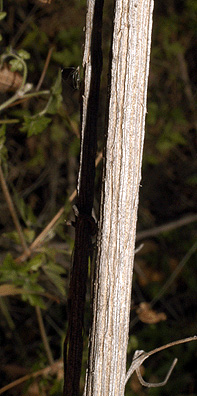
Bark: Initially smooth and light brown, later developing long splits and shreddy long strips.
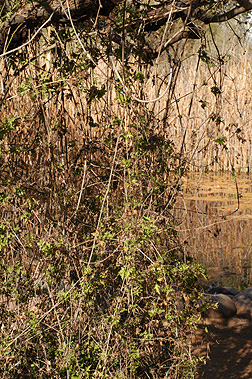
Form: A climbing vine that can completely overtake its supporting stucture in a dense tangle, to 20 feet.
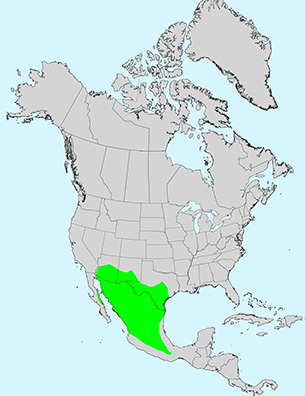
Additional Range Information: Clematis drummondii is native to North America. Range may be expanded by planting. Download the full-size PDF map.
External Links: USDA Plants Database
All material 2021 Virginia Tech Dept. of Forest Resources and Environmental Conservation; Photos and text by: John Seiler, Edward Jensen, Alex Niemiera, and John Peterson; Silvics reprinted from Ag Handbook 654; range map source information