 Virginia Tech Dendrology
Japanese yew Taxaceae Taxus
cuspidata Siebold & Zucc.

 symbol: TACU
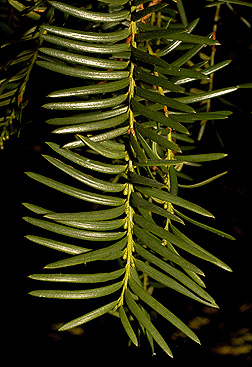
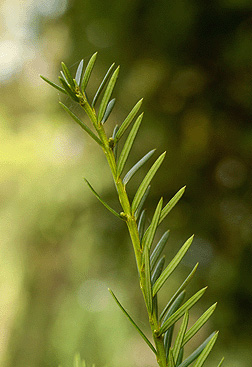
Leaf: Evergreen needles, single, spirally arranged but appearing 2-ranked on shaded branches, needles lay very flat, approximately 1 inch long, dark green and shiny above, tip abruptly pointed, yellow or pale green below with 12-15 rows of stomates.
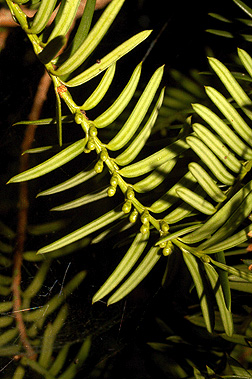
Flower: Species is dioecious; male flowers are small, round, and yellow and are borne on the undersides of the leaves; female flowers are solitary.
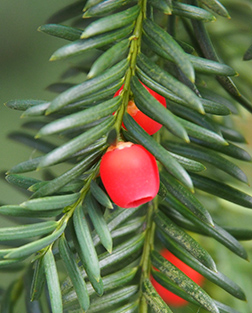
Fruit: Naked ovoid seed 1/4 inch long, surrounded by a bright red, fleshy aril, maturing in late summer, persistent through fall.
Twig: Light green in color, turning brown after several years; buds green with keeled scales, female flower buds are pointed, males rounded.
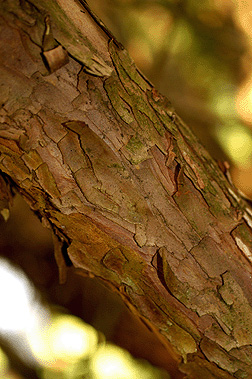
Bark: Always thin (about 1/4 inch), reddish brown, and scaly; inner bark is reddish purple.
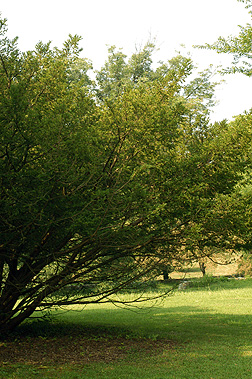
Form: Small tree or large shrub to 25 feet, with many limbed boles and a short trunk.
Looks like: English yew
- Pacific yew
- Anglo-Jap yew
- eastern hemlock
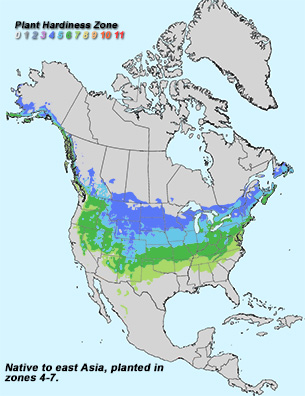
Additional Range Information: Taxus cuspidata is planted in the USDA hardiness zones shown above and may seed into the landscape. Download the full-size PDF map.
External Links: USDA Plants Database
All material 2021 Virginia Tech Dept. of Forest Resources and Environmental Conservation; Photos and text by: John Seiler, Edward Jensen, Alex Niemiera, and John Peterson; Silvics reprinted from Ag Handbook 654; range map source information