 Virginia Tech Dendrology
black willow Salicaceae Salix
nigra Marshall


 symbol: SANI
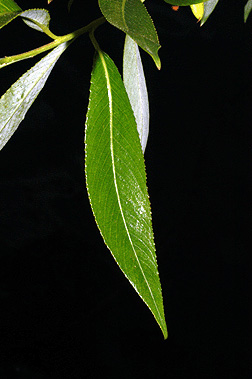
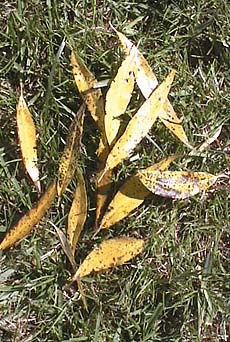
Leaf: Alternate, simple, pinnately veined, lanceolate in shape, 3 to 6 inches long, with a finely serrate margin. Leaves are dark and shiny above, light green below.
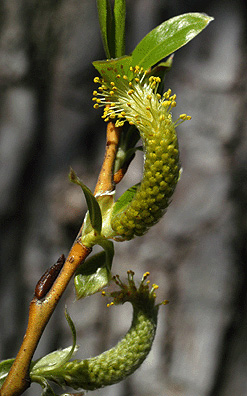
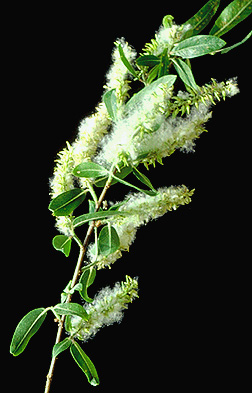
Flower: Species is dioecious; flowers are tiny, green, borne on catkins, 1 to 3 inches long, early summer.
Fruit: Cone-shaped capsules that contain many small, cottony seeds, borne on catkins; capsules split at maturity, mid summer.
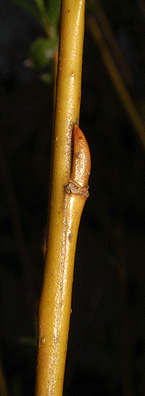
Twig: Slender, orange-brown in color, with a bitter aspirin taste; buds are small and appressed, covered by one bud scale, the terminal bud absent; stipules/scars are obvious.
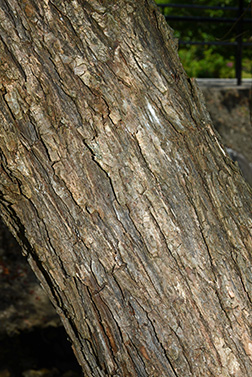
Bark: Brown to gray-black, with thick, somewhat scaly ridges and deep furrows.
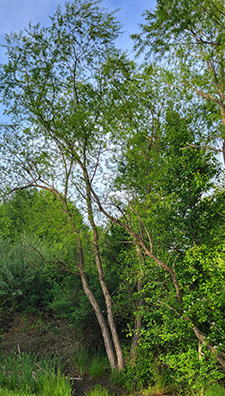
Form: A small to medium sized tree that can develop a massive trunk with a spreading, irregular crown. Black willows are often affected by crown gall, and witches brooms and trunk sprouting are common.
Looks like: white willow
- sandbar willow
- weeping willow
- Goodding's willow
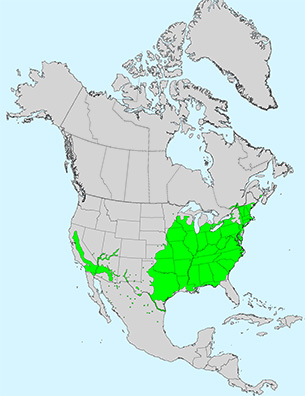
Additional Range Information: Salix nigra is native to North America. Range may be expanded by planting. Download the full-size PDF map.
More Information: Fall Color - Wood

External Links: USDAFS Silvics of North America - USDAFS FEIS Silvics - USDA Plants Database - USDAFS Forest Products Lab
All material 2025 Virginia Tech Dept. of Forest Resources and Environmental Conservation; Photos and text by: John Seiler, Edward Jensen, Alex Niemiera, and John Peterson; Silvics reprinted from Ag Handbook 654; range map source information