 Virginia Tech Dendrology
Japanese raisintree Rhamnaceae Hovenia
dulcis Thunb.

 symbol: HODU2
Leaf: Alternate, simple, deciduous, ovate, 5 to 7 inches long, serrated margin, 3 prominent veins originate from leaf base, petiole long, shiny green above, paler below.
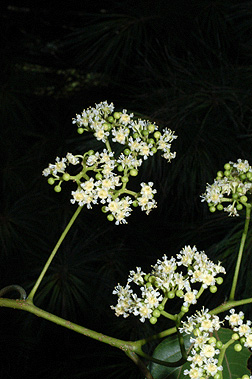
Flower: Large (3 to 4 inches across) clusters of small (1/3 inch), very pale green (nearly white) fragrant flowers, appearing in mid to late summer.
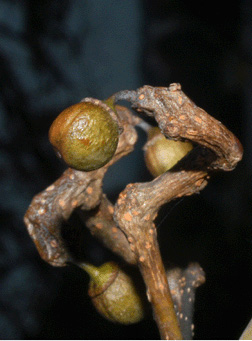
Fruit: Round drupe, 1/3 inch in diameter, in small clusters, reddish brown when ripe in early fall, edible and sweet (like a raisin).
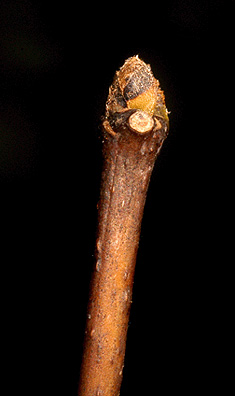
Twig: Moderate, reddish brown; buds gray to brown, finely hairy, broadly conical and pointed.
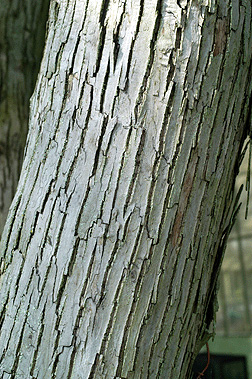
Bark: Light gray, shallowly fissured with flat, peeling narrow plates.
Form: Small tree reaching up to 30 to 40 feet in height, with an open, spreading crown.
Looks like: dove tree

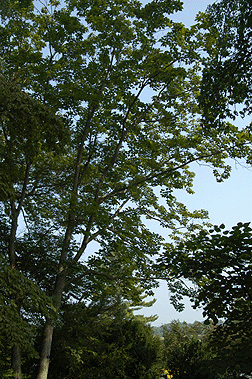
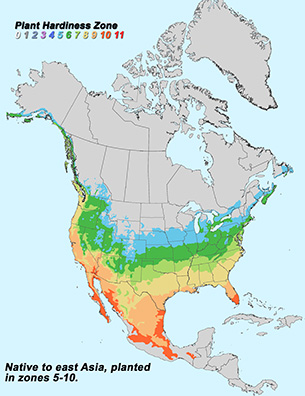
Additional Range Information: Hovenia dulcis is planted in the USDA hardiness zones shown above and is not known to widely escape cultivaton. Download the full-size PDF map.
External Links: USDA Plants Database - Horticulture Information
All material 2025 Virginia Tech Dept. of Forest Resources and Environmental Conservation; Photos and text by: John Seiler, Edward Jensen, Alex Niemiera, and John Peterson; Silvics reprinted from Ag Handbook 654; range map source information