 Virginia Tech Dendrology
Shantung maple Aceraceae Acer
truncatum Bunge

 symbol:
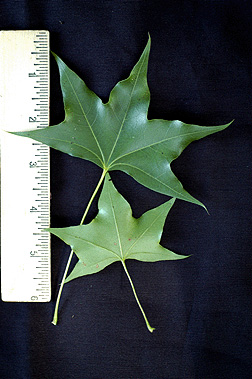
Leaf: Opposite, simple, overall shape a half circle, 3 to 6 inches wide, usually 5 v-shaped lobes (may resemble a sweetgum leaf) with entire margins, usually with a truncate leaf base, exudes milky white sap from the petiole when detached, green above and below. Subspecies mono has shallower sinuses, giving it a boxey look.
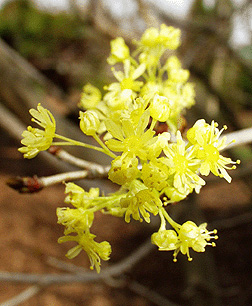
Flower: Yellow to green, each flower to 1/2 inch wide (large for a maple), clustered in 3 inch flower heads, appearing in spring.
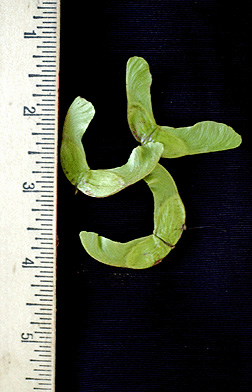
Fruit: Two-winged pair of samaras about 1 inch long, forming a broad U shape or tight V shape, oval seed cavity, matures in early fall.
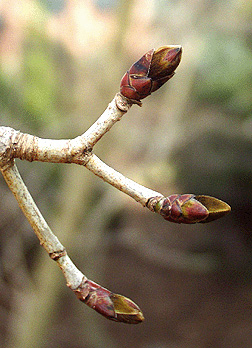
Twig: Reddish brown to grayish brown (some with a purple tint), buds plump and green to purplish brown, somewhat elongated.
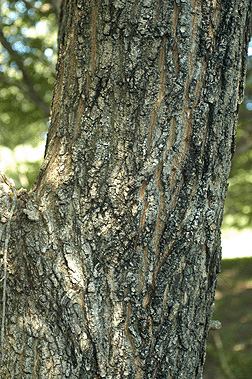
Bark: Variable, but generally grayish brown or with a purple tint, young bark warty; older trees may be somewhat furrowed, with short, thick, irregular curling-outward ridges.
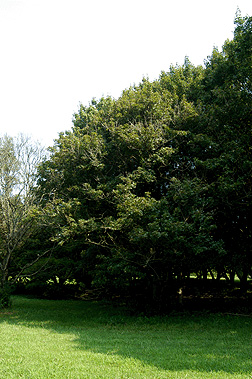
Form: A small tree with a round crown, commonly to 25 feet (subsp. mono to 40 feet and more, spreading).
Looks like: Norway maple
- sweetgum
- Miyabe maple
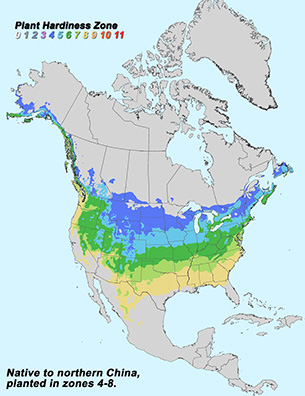
Additional Range Information: Acer truncatum is planted in the USDA hardiness zones shown above and is not known to widely escape cultivaton. Download the full-size PDF map.
External Links:
All material 2021 Virginia Tech Dept. of Forest Resources and Environmental Conservation; Photos and text by: John Seiler, Edward Jensen, Alex Niemiera, and John Peterson; Silvics reprinted from Ag Handbook 654; range map source information