 Virginia Tech Dendrology
whitebark raspberry Rosaceae Rubus
leucodermis Douglas ex Torr. & A. Gray

 symbol: RULE
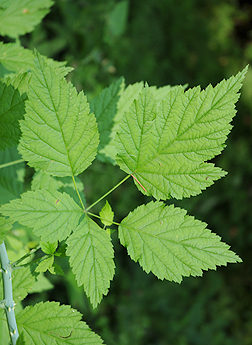
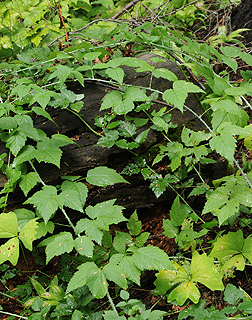
Leaf: Alternate, compound, deciduous; young leaves typically have 5-7 leaflets while older leaves have 3; leaflets are broadly ovate and coarsely toothed, crinkly in appearance, green above and either paler green or white below with soft hairs.
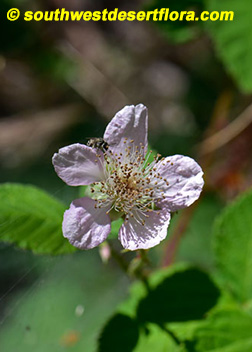
Flower: Small white to pink flowers less than 1 inch across; occur singly or in clusters of 3-7 terminally or in leaf axils, appear in spring and early summer.
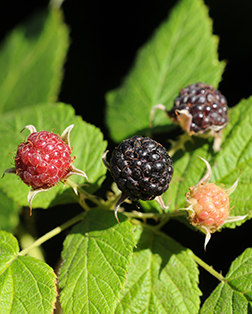
Fruit: Purple or black raspberries covered in a whitish bloom each 1/2 inch across; distinctly hairy; initially red but darken with age, edible and very tasty when ripe in late summer.
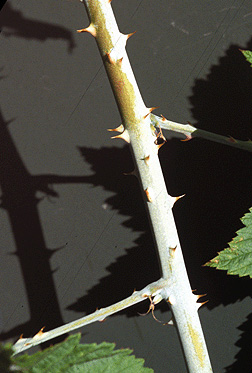
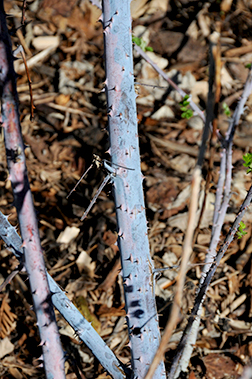
Twig: Round stems covered with white bloom and armed with curved, flattened prickles.
Bark: Leucodermis means "with a white skin", a reference to the whitish bark.
Form: A thicket forming shrub with arching habit (many branches arch back to the ground), grows to 6 feet tall.
Looks like: Himalaya blackberry
- evergreen blackberry
- salmonberry
- wild blackberry
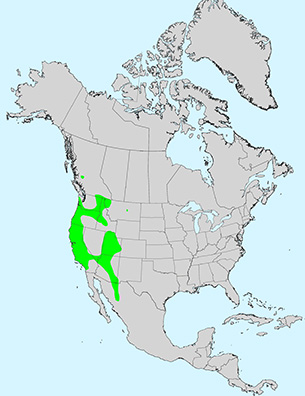
Additional Range Information: Rubus leucodermis is native to North America. Range may be expanded by planting. Download the full-size PDF map.
External Links: USDA Plants Database
All material 2025 Virginia Tech Dept. of Forest Resources and Environmental Conservation; Photos and text by: John Seiler, Edward Jensen, Alex Niemiera, and John Peterson; Silvics reprinted from Ag Handbook 654; range map source information