 Virginia Tech Dendrology
thinleaf alder Betulaceae Alnus
incana ssp. tenuifolia (L.) Moench ssp. (Nutt.) Breitung

 symbol: ALINT
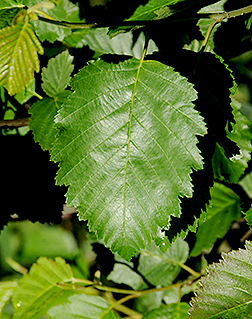
Leaf: Alternate, simple, oval, doubly serrated, 2 to 4 inches long, dull dark green above, paler with slight pubescence below, obviously thin.
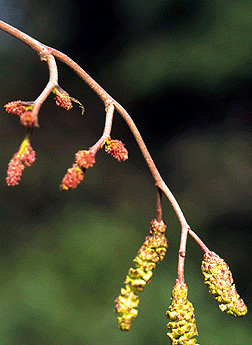
Flower: Species is monoecious; in small clusters, preformed male catkins are 1/2 to 1 inch long, slender and green; females are much smaller, reddish green, open in early spring.
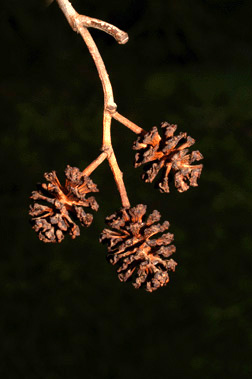
Fruit: Cone-like, 1/2 inch long, brown when ripe, each scale enclosing a very small winged seed, mature in late summer, and persistent.
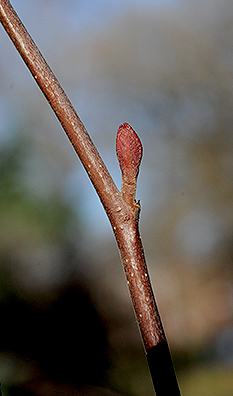
Twig: Moderate, gray-brown to reddish brown, velvety, lighter lenticels, buds stalked, plump and reddish brown.
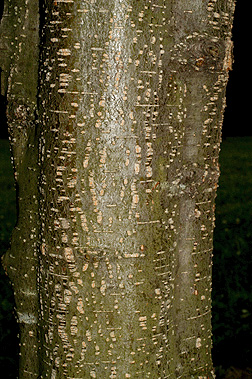
Bark: Smooth gray-green to reddish brown with numerous conspicuous horizontal white to light orange lenticels, becoming scaly on old trees.
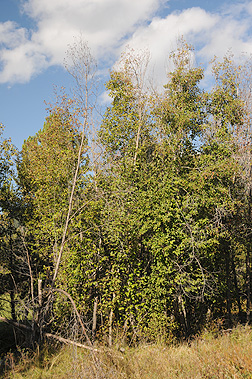
Form: A thicket-forming suckering shrub or small tree that reaches 25 feet in height, and may reach 40 feet.
Looks like: speckled alder
- hazel alder
- Sitka alder
- white alder
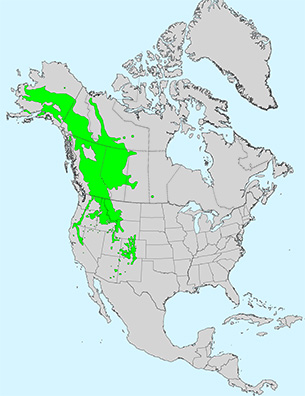
Additional Range Information: Alnus incana ssp. tenuifolia is native to North America. Range may be expanded by planting. Download the full-size PDF map.
External Links: USDAFS FEIS Silvics - USDA Plants Database - USDAFS Forest Products Lab
All material 2025 Virginia Tech Dept. of Forest Resources and Environmental Conservation; Photos and text by: John Seiler, Edward Jensen, Alex Niemiera, and John Peterson; Silvics reprinted from Ag Handbook 654; range map source information