 Virginia Tech Dendrology
desert false indigo Fabaceae Amorpha
fruticosa L.

 symbol: AMFR
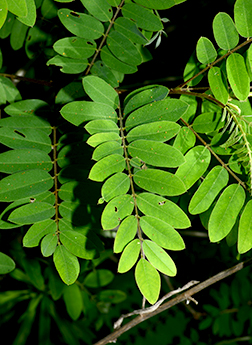
Leaf: Alternate, pinnately compound, to 10 inches long, up to 35 leaflets per leaf, each leaflet elliptical with an entire margin and on a petiole, 1/2 to 1 1/2 inches long, dull green above and light green below, usually glabrous, a slender stipule is present with young leaves.
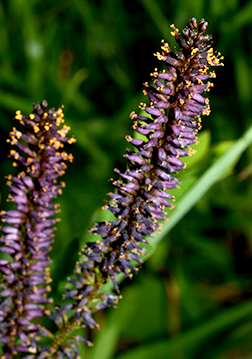
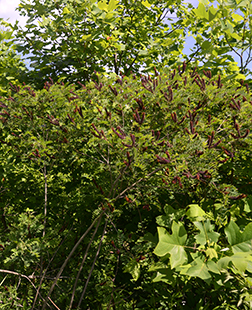
Flower: Borne on tall (to 6 inch), slender spikes at the ends of the twigs, deep purple-blue with long bright orange or yellow anthers, appearing mid-summer, opening from base to tip.
Fruit: Best described as tiny cucumbers, bright green and drying to brown, from 1/4 to 1/2 inch long.
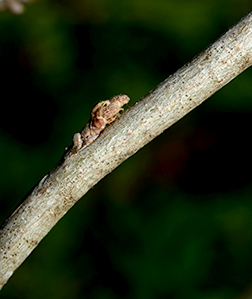
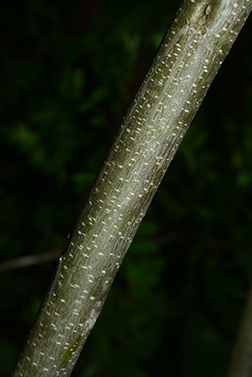
Twig: Moderate, gray-brown and somewhat grooved below the nodes, may be covered in fine white pubescence, buds are small, gray-brown and appressed.
Bark: Smooth and gray.
Form: A multi-stem suckering shrub to 10 feet tall and nearly as wide, often described as "leggy".
Looks like: pea tree
- rattlebox
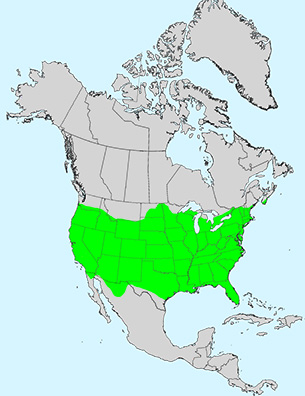
Additional Range Information: Amorpha fruticosa is native to North America. Range may be expanded by planting. Download the full-size PDF map.
External Links: USDA Plants Database
All material 2021 Virginia Tech Dept. of Forest Resources and Environmental Conservation; Photos and text by: John Seiler, Edward Jensen, Alex Niemiera, and John Peterson; Silvics reprinted from Ag Handbook 654; range map source information